



Breast Cancer Survival Rate: What the Numbers Really Mean
Posted By Dr Farah Arshad |Breast Cancer Specialist in Lucknow
If you or someone you love has been diagnosed with breast cancer, the first thing you probably searched was: “What are the survival rates?”
That’s completely natural. And you deserve a clear, honest answer — not just numbers, but what those numbers actually mean for real people.
Let’s break it down.
What Is a Breast Cancer Survival Rate?
A breast cancer survival rate tells you how many people with breast cancer are still alive after a certain period — usually 5 years — compared to people without cancer.
For example, a 90% survival rate means that out of 100 people with that type and stage of breast cancer, about 90 are alive 5 years after diagnosis.
But here’s something important: these numbers are based on past data. Treatments today are far better than they were even 5–10 years ago. So the actual survival rates today may be even higher than what the statistics show.
Breast Cancer Survival Rate by Stage
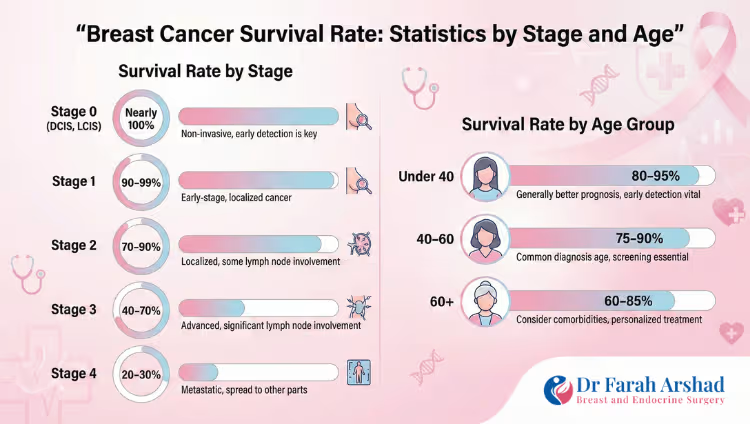
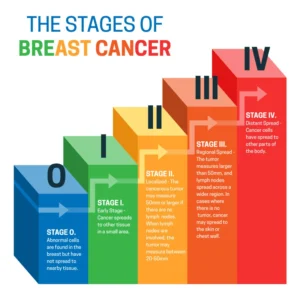
The stage of breast cancer — how far it has spread — is one of the biggest factors in survival. Here’s a simple breakdown:
| Stage | What It Means | 5-Year Survival Rate |
|---|---|---|
| Stage 0 | Abnormal cells, not yet cancer | ~99% |
| Stage 1 | Small tumor, no spread | ~95–99% |
| Stage 2 | Tumor has grown or spread to nearby nodes | ~80–93% |
| Stage 3 | Spread to more lymph nodes or nearby tissue | ~60–85% |
| Stage 4 | Spread to other organs (metastatic) | ~25–35% |
Remember: These are averages. Your actual outcome depends on many personal factors — your tumor type, your treatment, your overall health, and how early the cancer was caught.
Survival Rate by Age — Does Age Matter?
Yes, age plays a role — but not in the way most people think.
Younger women (under 40) are more likely to have aggressive tumor types, like triple-negative or HER2-positive breast cancer. These grow faster but can also respond well to targeted treatments.
Older women may have slower-growing tumors, but other health conditions like heart disease can affect treatment choices and outcomes.
The bottom line: age is just one piece of the picture. What matters more is the biology of the tumor and the treatment received.
The 4 Main Types of Breast Cancer and How Survival Differs
Not all breast cancers are the same — even within the same stage. The type of breast cancer often matters more than the stage alone.
Hormone receptor-positive (ER+/PR+): Most common type. Generally good survival rates, but risk of recurrence can continue beyond 5 years — sometimes up to 15–20 years. Long-term hormone therapy is important.
HER2-positive: Used to have worse outcomes. Today, targeted therapies have dramatically improved survival, even at advanced stages.
Triple-negative: More aggressive, higher recurrence in the first 3–5 years. However, if a patient remains cancer-free beyond that window, the long-term outlook improves significantly.
Luminal A (slow-growing, hormone receptor positive): Best overall prognosis among the subtypes.
Why the 5-Year Survival Rate Can Be Misleading
The 5-year number is the most commonly used — but it doesn’t tell the whole story.
For hormone-receptor-positive cancers, recurrence risk doesn’t end at 5 years. It can stretch to 10 or even 20 years. This is why many doctors recommend continuing hormone therapy (like tamoxifen) for 10 years, not just 5.
Also, modern imaging detects cancer at earlier stages than before. This means patients who might have been classified as Stage 3 in the past are now classified earlier. This shifts survival statistics — not always because treatment improved, but because detection improved.
What Actually Affects Your Survival?
Here are the real factors that shape individual outcomes:
Stage at diagnosis — Earlier is always better. Stage 1 caught early has near-perfect survival.
Tumor subtype — Triple-negative and HER2-positive cancers need different treatments than hormone-positive cancers.
Response to treatment — Patients who respond well to pre-surgery chemotherapy (neoadjuvant therapy) tend to have better long-term outcomes.
Completing your treatment — Stopping hormone therapy early or missing radiation significantly increases recurrence risk.
Access to specialist care — Survival outcomes are better when experienced oncology teams treat patients.
Lifestyle factors — Maintaining a healthy weight, staying physically active, and not smoking all support better outcomes.
The Part Nobody Talks About: Life After Survival
Surviving breast cancer is not the same as returning to your old life overnight. Many survivors deal with long-term effects of treatment, including fatigue and joint pain from hormone therapy, lymphedema (swelling in the arm), memory and concentration issues, bone thinning from long-term hormone therapy, heart-related effects from certain chemotherapy drugs, and fertility concerns in younger women.
These are real challenges — and they deserve real support. A good care team doesn’t just treat the cancer; they help you live well after it.
Survival Starts Before Diagnosis
Here’s something the statistics never show: survival curves begin at symptom recognition.
A painless lump ignored for 6 months versus one evaluated within 2 weeks can mean the difference between Stage 1 and Stage 3.
Warning signs to never ignore include a new lump in the breast or underarm, changes in breast shape or size, skin dimpling or redness, nipple discharge (especially if bloody), and nipple turning inward suddenly.
If you notice any of these, don’t wait. Early evaluation saves lives.
8 Frequently Asked Questions About Breast Cancer Survival Rate
1. What is the overall breast cancer survival rate in India?
The 5-year survival rate for breast cancer in India varies widely based on stage and access to care. Early-stage breast cancer (Stage 1–2) has survival rates of 80–95%, but many women in India are diagnosed at later stages, which lowers the overall average. Improving early detection is the key priority.
2. Does a Stage 4 breast cancer diagnosis mean there is no hope?
No. Stage 4 breast cancer is serious, but many patients live for years with good quality of life, especially with modern targeted therapies. Some HER2-positive Stage 4 patients respond remarkably well to treatment. Every case is different — speak to a specialist about your specific situation.
3. Is breast cancer survival rate different for younger women?
Younger women (under 40) are more likely to have aggressive subtypes, which can affect prognosis. However, they also tend to receive more intensive treatment and often tolerate it better. Age alone does not determine outcome.
4. How accurate are breast cancer survival statistics?
They are useful for understanding general trends but are not predictions for individuals. They are based on data from patients treated years ago, and today’s treatments are significantly better. Your oncologist can give you a more personalized picture based on your specific tumor.
5. Can lifestyle changes improve breast cancer survival?
Yes. Research consistently shows that maintaining a healthy weight, regular physical activity, a balanced diet, and avoiding alcohol can reduce recurrence risk and improve overall survival. These are things you can actively control.
6. What is the survival rate for triple-negative breast cancer?
Triple-negative breast cancer is more aggressive, with a 5-year survival rate of roughly 77% for all stages combined. However, if a patient is cancer-free after 5 years, their long-term outlook improves substantially because this type tends to recur early if it recurs at all.
7. Does breast cancer come back after 5 years?
It can, especially for hormone receptor-positive cancers. Late recurrence — even after 10–15 years — is a real possibility with ER-positive disease. This is why long-term endocrine therapy and regular follow-up are so important even when you feel well.
8. How can I improve my chances of surviving breast cancer?
The most powerful steps are: getting diagnosed early, working with an experienced breast cancer specialist, completing your full course of treatment, attending all follow-up appointments, and making healthy lifestyle changes. Early detection alone can shift your stage — and your outcome — dramatically.
Consult a Breast Cancer Specialist in Lucknow — Dr. Farah Arshad
Understanding survival statistics is one thing. Getting the right care is another.
Dr. Farah Arshad is a trusted breast cancer specialist in Lucknow with experience in diagnosing and treating all stages and subtypes of breast cancer. Whether you have a new concern, a recent diagnosis, or are looking for a second opinion, Dr. Farah Arshad provides personalized, evidence-based care with compassion.
Don’t let fear or confusion delay your evaluation. The earlier you act, the better your chances.
Book your consultation with Dr. Farah Arshad today. Because survival doesn’t begin in a statistic — it begins with the decision to seek help.
