



Scarless Breast Surgery: What It Really Means — and What No One Tells You
By Dr. Farah Arshad | Breast Surgeon in Lucknow
Patients today come to the clinic with one big question: “Can my surgery be done without any scars?”
It is a fair question. Social media is full of videos and posts about “scarless” surgery. The idea sounds amazing — get your breast surgery done and walk out with no marks at all.
But the truth is a little more complicated than that.
And as a breast surgeon in Lucknow, Dr. Farah Arshad believes that patients deserve the full truth — not just the exciting parts.
This blog will explain what scarless breast surgery actually means, what techniques are used today, what the real limitations are, and when cosmetic goals must take a back seat to your safety.
First Things First: Does “Scarless” Surgery Really Mean No Scars?
No. It does not.
True scarless surgery does not exist. Every surgery — no matter how advanced — requires a cut in the skin. After that cut heals, some kind of mark is left behind.
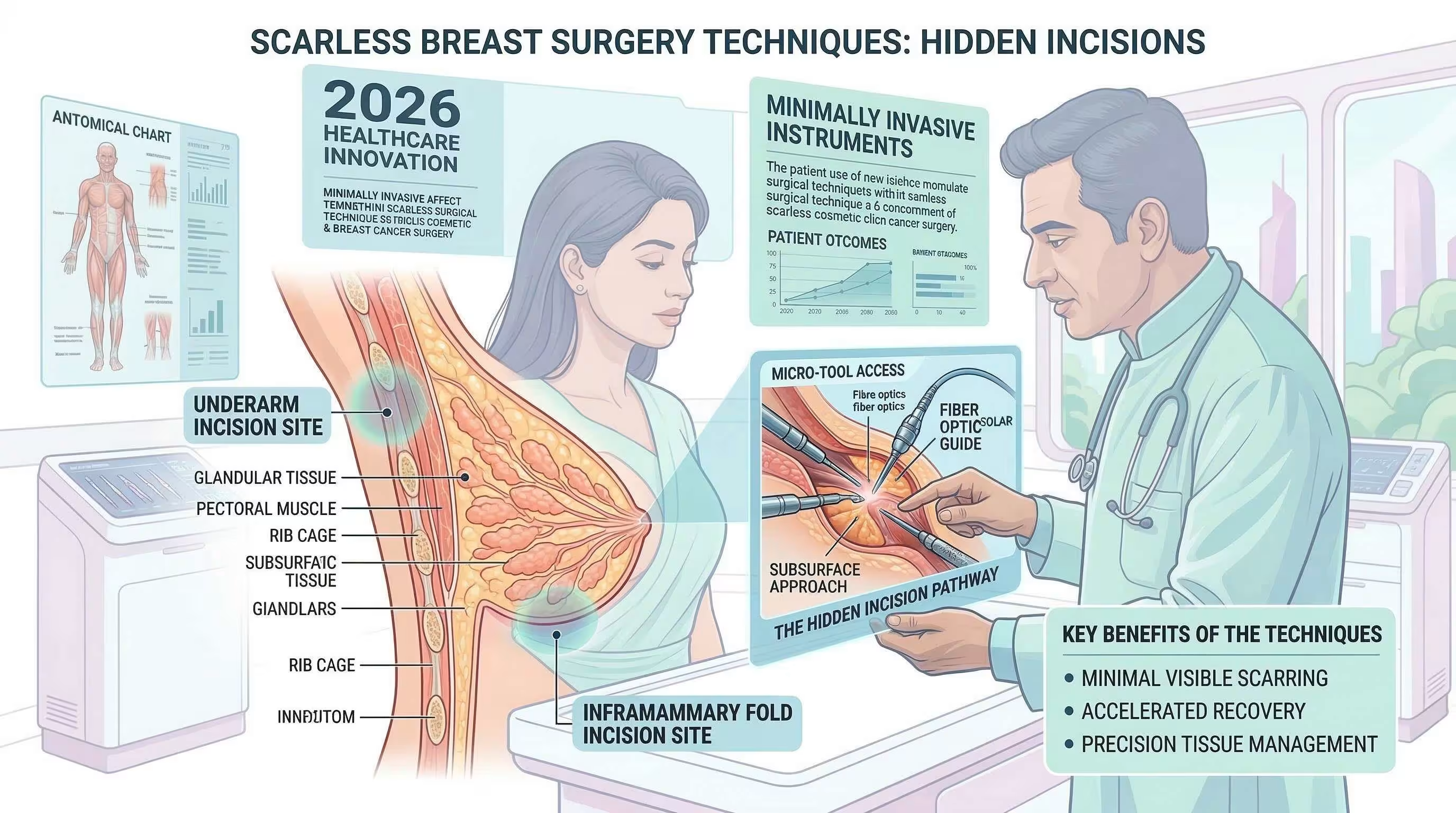
What modern surgery CAN do is hide those marks very well. The goal is to place incisions in areas where they are difficult to see — inside natural skin folds, along the edge of the areola, or in the armpit.
So when people say “scarless surgery,” they really mean:
- Smaller cuts
- Smarter placement of cuts
- Less damage to surrounding tissue
- Better healing techniques
The scar is still there. It is just hidden very well.
Many clinics and online articles do not make this clear. This creates unrealistic expectations, which leads to disappointed patients after surgery. Dr. Farah Arshad, breast surgeon in Lucknow, always ensures patients understand this before making any decision.
Why Is Everyone Talking About Scarless Surgery in 2026?
Three main reasons are driving the increased interest.
1. Breast cancer is being found earlier
Thanks to better screening tools like mammography, breast MRI, and genetic testing, more tumors are being discovered when they are still very small. Smaller tumors mean surgeons have more options. They can remove less tissue, use smaller cuts, and preserve more of the breast.
2. Oncoplastic surgery has improved
Oncoplastic surgery is a newer approach that combines cancer removal with cosmetic reconstruction. Surgeons do not just remove the tumor — they also reshape the breast at the same time. This means scar placement becomes part of the surgical plan from the very beginning.
3. Endoscopic and robotic tools have advanced
New technology allows surgeons to access breast tissue through very small cuts in hidden areas. Instead of making a large cut directly on the breast, tools can be inserted through the armpit or the fold under the breast.
These are genuine advances. But they also come with real limitations that most online articles simply ignore.
The Main Techniques Used Today
1. Axillary Incision (Underarm Approach)
The cut is made inside the armpit crease, where it is almost completely hidden.
Advantages: The breast skin is not touched at all. The scar sits in a natural fold that is very hard to see.
Common uses: Breast enlargement surgery, removal of small benign lumps, selected early-stage cancer cases.
What most articles do not tell you: Working through the armpit is technically difficult. The surgeon must work through a longer tunnel with limited space and limited visibility. In less experienced hands, this approach can lead to incomplete tumor removal, internal bleeding, or uneven results. This is why many cancer surgeons still prefer to make a direct breast incision when cancer is involved — because safety must come first.
2. Periareolar Incision (Around the Nipple)
This cut follows the natural border between the darker skin of the areola and the lighter skin of the breast. The color difference at this border helps hide the scar very effectively.
Common uses: Removal of breast lumps, benign tumor excision, selected cancer surgeries.
What most articles do not tell you: This approach can sometimes cause reduced nipple sensation, damage to milk ducts, or difficulty breastfeeding. These are important considerations for younger patients who are planning to have children. A good surgeon will always discuss these risks before recommending this approach.
3. Inframammary Fold Incision (Under the Breast)
The cut is placed in the natural crease where the breast meets the chest. When the patient is standing, the breast covers this area completely.
Common uses: Breast augmentation, reduction, implant surgeries.
What most articles do not tell you: Many experienced surgeons actually prefer this approach because it gives them the best view and control during surgery. Lower complication rates. More predictable results. The lesson here is important — sometimes the most cosmetically hidden incision is NOT the safest one. The best option depends on the individual patient.
Chart 1: Incision Type Comparison at a Glance
| Incision Type | Where the Cut Is Made | Best For | Main Limitation |
|---|---|---|---|
| Axillary (Underarm) | Inside armpit crease | Augmentation, small lumps | Limited surgical visibility |
| Periareolar | Edge of the areola | Lump removal, benign tumors | Risk to nipple sensation |
| Inframammary Fold | Crease under the breast | Augmentation, implants | Less hidden than others |
| Endoscopic / Robotic | Small side chest incisions | Nipple-sparing mastectomy | Expensive, limited availability |
When Breast Cancer Changes Everything
Here is where things get very important.
A lot of online content about scarless surgery treats it like a cosmetic procedure. Something you choose the way you choose a hairstyle.
Cancer surgery is completely different.
When cancer is involved, the number one goal is to completely remove the tumor with clear margins — meaning no cancer cells are left behind at the edges. Everything else, including how the scar looks, comes after that.
Scar-minimizing techniques can absolutely be used in some breast cancer surgeries. But they cannot be used in every case.
They work best when:
- The tumor is small
- The tumor is located in a favorable position
- The patient has enough breast volume
- Cancer has not spread to the skin or nipple
They become a problem when:
- The tumor is large
- The tumor is in multiple areas
- The cancer is close to the skin or nipple
- The patient has inflammatory breast cancer
In those situations, Dr. Farah Arshad, breast surgeon in Lucknow, may recommend larger incisions, wider removal of tissue, or even a mastectomy. Patients sometimes resist this because they want a cosmetic result. But a surgeon’s job is to protect your life first, and your appearance second.
What About Robotic Breast Surgery?
Robotic systems are now being explored for nipple-sparing mastectomy, reconstruction, and endoscopic breast procedures. The cuts can be made in the armpit or on the side of the chest — very far from the breast itself.
The potential benefits are real — precise movement, smaller scars, better recovery.
But robotic breast surgery is still not standard practice. Here is why:
- Operations take much longer
- The learning curve is very steep
- Equipment is expensive
- Very few hospitals in India currently offer this routinely
It shows promise. But patients should not assume it is widely available or proven for all breast cancer cases.
Chart 2: Scar-Minimizing Surgery vs Traditional Surgery — A Simple Comparison
| Factor | Scar-Minimizing Approach | Traditional Open Approach |
|---|---|---|
| Scar visibility | Low — hidden in folds or creases | More visible, but still manageable |
| Tumor size suitability | Best for small, early tumors | Suitable for all tumor sizes |
| Surgical visibility | Limited in some techniques | Excellent — direct access |
| Risk of incomplete removal | Slightly higher in complex cases | Lower with direct access |
| Recovery time | Often shorter | Varies by case |
| Cancer safety | Depends on case selection | Consistently high |
| Cost and availability | Higher cost, less available | Widely available |
The Hidden Truths Most Blogs Skip
Scarless Techniques Can Fail With Larger Tumors
These techniques work beautifully in the right cases. But if the tumor is large, located near the skin, or in a difficult position, a hidden incision can actually make it harder to remove everything safely. This can result in positive margins — cancer cells left at the edge of the removed tissue — which means the patient must go back for another surgery. Two surgeries are worse than one slightly visible scar.
Radiation Can Change Your Results
Many patients who have a lumpectomy (breast-conserving surgery) also need radiation therapy afterward. Radiation can cause the breast tissue to shrink, harden, or change shape over time. A scar that looked perfect right after surgery may not look the same after six months of radiation. No surgeon can control this. Patients need to know this before they get too focused on immediate cosmetic results.
Every Patient Heals Differently
Even if the same surgeon makes the same cut in the same location on two different patients, the scars will look different. Healing depends on your genetics, skin type, age, whether you smoke, whether you have diabetes, and many other factors. A scar that heals well in one person may become raised or discolored in another. Scarless techniques reduce the risk of a visible scar. They cannot eliminate it.
Surgeons Are Still Learning Some of These Techniques
Advanced approaches like endoscopic breast surgery and robotic nipple-sparing mastectomy require extensive training. Some techniques require a surgeon to perform 50 to 100 cases before they reach full proficiency. Early patients in a surgeon’s learning curve may face longer operation times or higher complication rates. This is rarely mentioned in marketing content, but it matters enormously.
The Role of Oncoplastic Surgery
Oncoplastic surgery deserves special mention because it often delivers better long-term results than so-called scarless surgery in cancer cases.
Instead of just removing the tumor and closing the skin, the surgeon also reshapes the remaining breast tissue. Techniques include rearranging the tissue, using internal flaps, or combining cancer removal with a breast reduction approach.
The result is that larger tumors can sometimes be removed without leaving the breast looking deformed. The scar may be more visible than in a hidden-incision approach, but the overall breast shape is far better preserved.
For many patients, this is actually the better choice.
How to Think About Your Decision
If you are considering scar-minimizing surgery, here is the order in which you should think through your decision:
- Is this approach oncologically safe for my specific tumor?
- Will it allow complete removal with clear margins?
- What are my chances of needing a second surgery?
- How will radiation affect my final result?
- Does my surgeon have enough experience with this technique?
Only after all of these questions are answered should you start thinking about how the scar will look.
Dr. Farah Arshad, breast specialist in Lucknow, takes patients through this decision-making process at every consultation. The goal is always to find the best balance between safety, long-term breast shape, and quality of life — not just the shortest scar.
Frequently Asked Questions (FAQs)
Q1. Is completely scarless breast surgery possible?
No. Every surgery requires a skin incision, which leaves some kind of mark. What modern techniques do is place these incisions in hidden locations — the armpit, the areola edge, or the crease under the breast — so the scar is very difficult to see. The correct term is scar-minimizing surgery, not scarless surgery.
Q2. Can scar-minimizing techniques be used for breast cancer surgery?
Yes, in selected cases. If the tumor is small, early-stage, and in a favorable location, these techniques can be used safely. However, if the tumor is large, close to the skin, or in a difficult position, a traditional approach with a more visible incision may be necessary to ensure complete and safe removal.
Q3. What is the best incision type for hidden scars?
It depends on the purpose of the surgery. The axillary incision is excellent for augmentation. The periareolar incision works well for lump removal. The inframammary fold incision is preferred for implant surgeries. There is no single “best” option — the right choice depends on your anatomy, tumor characteristics, and surgical goals.
Q4. Will radiation affect how my scar looks after breast-conserving surgery?
Yes, it can. Radiation therapy, which many patients receive after lumpectomy, can cause changes in the breast tissue including shrinkage, hardening, and shape changes. This can affect the final cosmetic result regardless of how well the incision was placed. Your surgeon should explain this before surgery.
Q5. How do I find a qualified surgeon for scar-minimizing breast surgery in Lucknow?
Look for a surgeon with specific training in oncoplastic breast surgery and experience with minimally invasive breast techniques. Dr. Farah Arshad is a breast surgeon in Lucknow with expertise in both breast cancer surgery and cosmetic reconstruction. During your consultation, ask how many procedures of this specific type your surgeon has performed and what their complication rates are.
Q6. Is robotic breast surgery available in Lucknow? Is it better than traditional surgery?
Robotic breast surgery is still relatively new and not yet widely available across India. It offers potential benefits in terms of smaller incisions and precise movement, but it is not proven to be superior to traditional surgery for all cases. It also requires specially trained surgeons and equipment. If you are interested in this option, speak with Dr. Farah Arshad, breast surgeon in Lucknow, to find out if it is appropriate for your specific situation.
Final Thoughts
Scar-minimizing breast surgery is a genuine advance in modern medicine. In the right patients, it delivers excellent results — both medically and cosmetically.
But it works best when patients have realistic expectations, tumors are detected early, and surgical planning is done carefully and individually.
Here is the most important thing to remember: a slightly visible scar that comes with complete cancer removal and long-term safety is always better than a perfectly hidden incision with a compromised result.
The goal is not invisible surgery.
The goal is safe, effective, and thoughtful treatment — with the best possible cosmetic outcome that your specific situation allows.
If you are considering breast surgery and want an honest, thorough consultation, Dr. Farah Arshad, Top breast surgeon in Lucknow, is available to discuss your options and help you make the most informed decision for your health and your life.
