



By Dr. Farah Arshad | Breast Surgeon in Lucknow
Radiation therapy is one of the most common treatments recommended after breast cancer surgery. It helps destroy any remaining cancer cells and significantly reduces the risk of cancer coming back.
Many patients undergo radiation therapy after procedures such as lumpectomy to ensure that microscopic cancer cells do not grow again. However, while doctors often explain the medical procedure, many patients still feel unprepared for the real-life experience of radiation therapy.
Learning from experienced specialists such as Dr. Farah Arshad, a trusted breast cancer specialist in Lucknow, can help patients better understand what to expect during treatment and recovery.
Key Points
-
Radiation therapy is commonly recommended after lumpectomy
-
It targets cancer cells that surgery might miss
-
Treatment plans vary depending on cancer stage and patient health
What Is Radiation Therapy for Breast Cancer?
How Radiation Therapy Works
Radiation therapy uses high-energy radiation to damage the DNA of cancer cells. When the DNA is damaged, cancer cells cannot grow or divide. Over time, these cells die and the body removes them naturally.
Healthy cells may also be affected, but they usually repair themselves more effectively than cancer cells.
When Doctors Recommend Radiation
Doctors recommend radiation therapy in several situations:
-
After lumpectomy to prevent cancer recurrence
-
After mastectomy in high-risk patients
-
When cancer has spread to lymph nodes
-
When tumors are large or aggressive
Types of Radiation Used in Breast Cancer
External Beam Radiation Therapy
This is the most common form of radiation treatment. A machine delivers radiation from outside the body to the breast area.
Partial Breast Irradiation
Radiation is directed only to the area where the tumor was removed.
Brachytherapy
Radioactive material is placed inside the breast tissue temporarily to deliver targeted radiation.
What to Expect During Radiation Therapy
Planning and Simulation
Before treatment begins, doctors perform detailed planning that includes CT scans and mapping of the treatment area. This process helps doctors create a personalized radiation plan for each patient.
Treatment Schedule
Most patients receive radiation therapy:
-
Five days per week
-
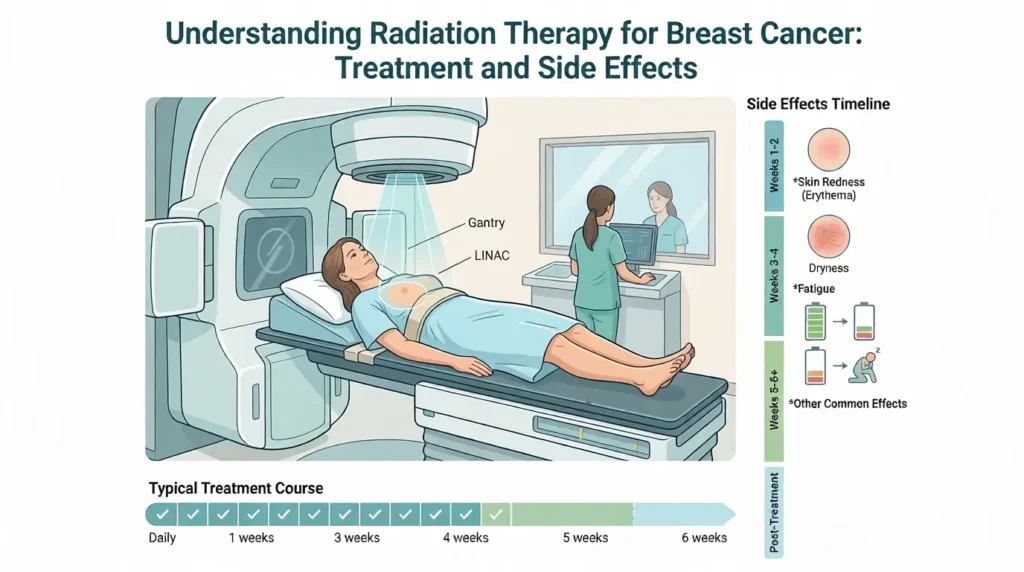
For about one to six weeks
-
Depending on the individual treatment plan
What Happens During Each Session
Radiation sessions are usually quick and painless.
Patients lie on a treatment table while the machine delivers radiation to the targeted area. Each session usually lasts about 10–20 minutes, and patients can go home the same day.
Hospital admission is usually not required.
Common Side Effects of Breast Cancer Radiation
Radiation therapy affects healthy cells as well as cancer cells, which can lead to temporary side effects.
Fatigue
Fatigue is one of the most common side effects of radiation therapy. Patients may feel tired or low on energy, especially as treatment progresses.
Skin Changes
Radiation can cause skin reactions similar to sunburn, including:
-
Redness
-
Dryness
-
Peeling
-
Darkening of the skin
Breast Swelling and Tenderness
Some patients experience temporary swelling or heaviness in the breast during treatment.
Hair Loss in the Underarm Area
Radiation may cause hair loss only in the area being treated, such as the underarm.
Shoulder Stiffness
Reduced arm movement or shoulder stiffness may occur when radiation affects nearby lymph nodes.
These side effects usually start during treatment and may continue for about two to four weeks after therapy ends before improving.
Long-Term Side Effects Patients Should Know
Although uncommon, some long-term side effects may appear months or years later.
Changes in Breast Shape or Firmness
The treated breast may become slightly firmer or smaller after radiation therapy.
Lymphedema
Damage to lymph nodes can lead to swelling in the arm or chest area.
Heart or Lung Effects
Radiation to the left breast can rarely affect nearby organs such as the heart or lungs. Modern radiation techniques significantly reduce this risk.
Risk of Secondary Cancer
There is a very small risk of developing another cancer many years after radiation therapy.
Recovery After Radiation Therapy
Recovery Timeline
Most patients gradually recover after radiation therapy.
Fatigue improves over time, and skin reactions usually heal within a few weeks.
Tips for Faster Recovery
Doctors often recommend:
-
Gentle physical activity
-
Drinking enough water
-
Maintaining a healthy diet
-
Proper skin care
When to Call Your Doctor
Patients should seek medical advice if they experience:
-
Severe skin reactions
-
Fever or infection symptoms
-
Persistent pain
What Nobody Tells You About Radiation Therapy
This section highlights experiences many patients learn only after starting treatment.
Emotional Fatigue Is Real
Many patients experience anxiety or fear of cancer recurrence during treatment.
Daily Travel Can Be Exhausting
Radiation therapy requires frequent hospital visits, which can be physically and emotionally tiring.
Skin Reactions Can Worsen After Treatment Ends
Skin irritation sometimes peaks one or two weeks after treatment finishes before improving.
Recovery Is Different for Everyone
Some patients feel normal quickly, while others may take months to fully recover.
Importance of Choosing the Right Breast Cancer Specialist
Breast cancer treatment requires specialized care and careful monitoring.
An experienced specialist helps ensure:
-
Accurate diagnosis
-
Personalized treatment planning
-
Effective management of side effects
Patients in Lucknow often seek care from Dr. Farah Arshad, who is known for providing expert breast cancer care and patient-focused treatment.
Multidisciplinary cancer teams also play an important role in achieving the best treatment outcomes.
Lifestyle Tips to Manage Radiation Side Effects
Patients can manage treatment side effects with simple lifestyle changes.
Skin Care
Use gentle moisturizers and avoid harsh products.
Clothing
Wear loose, soft cotton clothing to reduce skin irritation.
Nutrition
Eat balanced meals with fruits, vegetables, and protein.
Stress Management
Meditation, relaxation techniques, and support groups can help reduce stress.
Sleep
Maintain a regular sleep routine for better recovery.
When to Seek Medical Advice During Treatment
Contact your doctor immediately if you experience:
-
Severe swelling
-
Persistent fatigue
-
Difficulty breathing
-
Severe skin burns
Conclusion
Radiation therapy is a highly effective treatment used to reduce the risk of breast cancer recurrence after surgery. Although some side effects may occur, most are temporary and manageable.
Proper guidance and care from experienced specialists such as Dr. Farah Arshad can help patients navigate the treatment journey more comfortably and safely.
FAQs
Is radiation therapy painful for breast cancer?
No, the treatment itself is painless. However, patients may experience mild skin irritation or fatigue during therapy.
How long do radiation side effects last?
Most side effects improve within two to four weeks after treatment ends.
Can radiation cure breast cancer completely?
Radiation helps destroy remaining cancer cells and significantly reduces recurrence risk when combined with surgery.
What foods should be avoided during radiation therapy?
Highly processed foods, excessive sugar, and alcohol should be limited during treatment.
How do you care for skin during radiation treatment?
Use gentle moisturizers, avoid sun exposure, and wear loose clothing to protect the treated area.
