



Posted by Dr Farah Arshad | Female breast cancer specialist in Lucknow
Hormone therapy for breast cancer is a treatment that blocks or lowers estrogen to stop cancer growth. It is commonly used in hormone receptor-positive cancers and typically lasts 5–10 years to prevent recurrence. While highly effective, it can cause side effects like hot flashes and fatigue, which are manageable with expert care.
Receiving a breast cancer diagnosis is an overwhelming experience. You are suddenly faced with a new vocabulary of medical terms—chemotherapy, radiation, and hormone therapy for breast cancer. As a female breast cancer specialist in Lucknow, I meet many patients who feel confused about why they need “hormones” when they are trying to fight cancer.
In this guide, we will break down everything you need to know about hormone therapy (also called endocrine therapy) in simple, easy-to-understand language. My goal is to help you feel empowered, informed, and ready to take the next steps in your healing journey.
What Is Hormone Therapy for Breast Cancer?
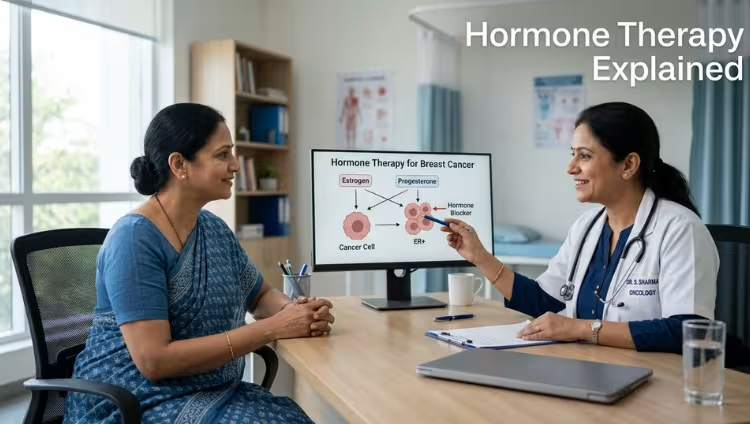
To understand hormone therapy, we first need to understand how some breast cancers grow.
What Hormones Do
In a healthy body, hormones like estrogen and progesterone help with things like the menstrual cycle and bone health. However, about 2 out of every 3 breast cancers are “hormone receptor-positive.” This means the cancer cells have receptors (think of them as little “ears” or “locks”) that catch estrogen and use it as fuel to grow and multiply.
Why Some Cancers Depend on Estrogen
If your pathology report says you have ER-positive (ER+) or PR-positive (PR+) breast cancer, it means estrogen or progesterone is acting like “gasoline” for the cancer fire.
How Hormone Therapy Works
Hormone therapy is not the same as Hormone Replacement Therapy (HRT) used for menopause. In fact, it is the opposite. While HRT adds hormones to the body, hormone therapy for breast cancer either:
-
Blocks the receptors so the cancer cells can’t “feed” on estrogen.
-
Lowers the amount of estrogen in the body entirely.
By doing this, we starve the cancer cells, making them stop growing or die off. This is a crucial part of breast cancer treatment because it helps prevent the cancer from coming back (recurrence) in the future.
Types of Hormone Therapy for Breast Cancer
There is no “one size fits all” approach. As a Breast Cancer specialist in Lucknow, I personalize treatment based on whether a patient has reached menopause and the specific stage of their cancer.
1. Tamoxifen (The Estrogen Blocker)
Tamoxifen is one of the most well-known estrogen blockers. It works by sitting in the estrogen receptor of the cancer cell. Imagine a lock and key: Tamoxifen acts like a broken key that gets stuck in the lock, so the real key (estrogen) can’t get in.
-
Who is it for? Both pre-menopausal and post-menopausal women.
2. Aromatase Inhibitors (AIs)
After menopause, a woman’s ovaries stop making estrogen. However, the body still makes small amounts of estrogen using an enzyme called “aromatase” to convert other hormones into estrogen. Aromatase inhibitors (like Letrozole, Anastrozole, and Exemestane) stop this process.
-
Who is it for? Primarily post-menopausal women.
3. Ovarian Suppression
In younger women, the ovaries are the main source of estrogen. Sometimes, we use drugs (like Zoladex) or surgery to stop the ovaries from working. This “shuts off the tap” of estrogen.
What is the best hormone therapy for breast cancer?
The “best” therapy depends on your age, your menopausal status, and the risk of the cancer returning. For many post-menopausal women, Aromatase Inhibitors are slightly more effective, but for younger women, Tamoxifen is often the gold standard.
How Long Does Hormone Therapy Last for Breast Cancer?
One of the most common questions I hear in my clinic is: “Hormone therapy for breast cancer: how long do I have to take it?”
Unlike chemotherapy, which usually lasts a few months, hormone therapy is a long-term commitment.
Typical Duration (5 to 10 Years)
-
The 5-Year Standard: For many years, 5 years was the standard. This significantly reduces the risk of the cancer returning.
-
The 10-Year Extension: Recent studies have shown that for some patients with a higher risk of recurrence, continuing therapy for 10 years provides even better protection.
The duration depends on your specific cancer recurrence prevention plan. We look at the size of the tumor and whether it has spread to the lymph nodes to decide if you need 5 or 10 years of protection.
Hormone Therapy Duration & Purpose (Quick Chart)
| Treatment Type | Duration | Purpose | Best Suited For |
| Tamoxifen | 5–10 years | Blocks estrogen receptors on cells | All women (pre & post-menopause) |
| Aromatase Inhibitors | 5 years | Stops estrogen production in tissues | Post-menopausal women |
| Ovarian Suppression | 2–5 years | Stops ovaries from making estrogen | Pre-menopausal women (high risk) |
| Fulvestrant | Ongoing | Destroys estrogen receptors | Advanced or Stage 4 cancer |
Side Effects of Hormone Therapy for Breast Cancer
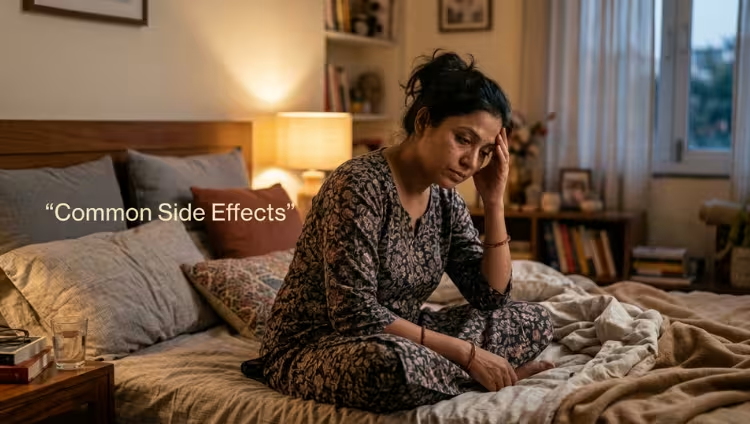
Because these drugs change the way hormones work in your body, they do come with side effects. Most of these feel like a “fast-forwarded” version of menopause.
Common Side Effects
-
Hot Flashes and Night Sweats: This is the most common complaint.
-
Fatigue: Feeling drained.
-
Joint and Muscle Pain: Especially common with Aromatase Inhibitors.
-
Mood Changes: Feeling irritable or down.
-
Vaginal Dryness: This can affect intimacy and comfort.
Side Effects of Estrogen Blockers for Breast Cancer (Specifics)
-
Tamoxifen: May slightly increase the risk of blood clots or uterine changes (though these are rare).
-
Aromatase Inhibitors: Can lead to bone thinning (osteoporosis), so we often monitor bone density.
A Reassuring Note: Most patients manage these side effects well. There are many ways to treat these symptoms—from lifestyle changes to supportive medications—without stopping the life-saving cancer treatment.
How Long Do Side Effects Last After Hormone Therapy?
A common worry is whether these side effects are permanent.
How long do side effects last after hormone therapy?
Most side effects are temporary. Once you finish your course (at the 5 or 10-year mark), your body usually begins to adjust within a few weeks to months.
-
Hot flashes typically fade relatively quickly.
-
Joint pain usually improves as the drug leaves your system.
-
Bone density issues may require long-term monitoring, but we can manage this with calcium and exercise.
If side effects are making your daily life difficult, you should never suffer in silence. As a Breast Cancer Surgeon in Lucknow, I work closely with my patients to adjust dosages or switch medications to ensure the treatment is bearable.
Hormone Therapy vs Chemotherapy – What’s the Difference?
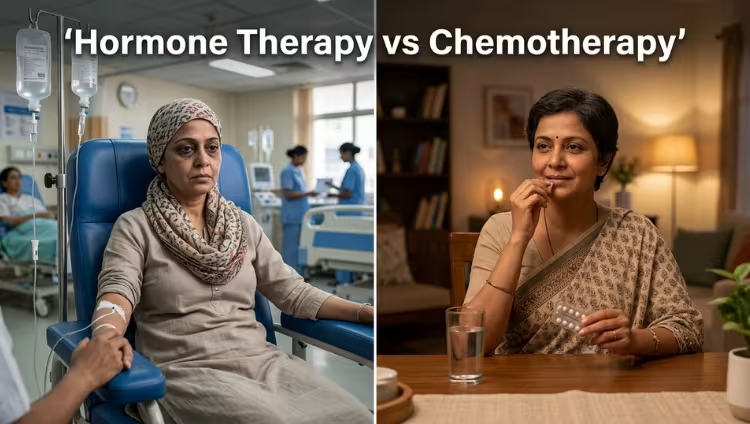
Patients often ask: Is hormone therapy better than chemotherapy?
It isn’t a matter of which is “better”; they simply do different jobs.
-
Chemotherapy: A systemic treatment that kills rapidly dividing cells (including cancer cells). It is usually given via IV over several months. It is “aggressive” and works to kill any existing cancer cells immediately.
-
Hormone Therapy: This is “targeted” therapy. It doesn’t necessarily kill all cells; it specifically starves the cancer cells of the “food” they need to grow. It has been taken as a daily pill for years.
In many cases, we use both. Chemotherapy clears the “big” problem, and hormone therapy acts as a long-term “shield” to prevent any tiny, invisible cells from growing back.
Pros and Cons of Hormone Therapy for Breast Cancer
Pros:
-
Highly Effective: It reduces the risk of the cancer returning by up to 50% in some cases.
-
Convenience: It is usually a daily pill you take at home.
-
Targeted: It doesn’t cause hair loss or the intense nausea often associated with chemo.
-
Long-term Protection: It protects both the affected breast and the other breast.
Cons:
-
Duration: Taking a pill every day for 5–10 years requires discipline.
-
Quality of Life Changes: Side effects like hot flashes and joint pain can be frustrating.
-
Bone Health: Some types require careful monitoring of bone strength.
Hormone Therapy for Advanced and Special Cases
Hormone Therapy for Breast Cancer Stage 4
In Stage 4 (metastatic) breast cancer, the goal of treatment shifts from “cure” to “control.” Hormone therapy is incredibly valuable here. It can keep the cancer stable for a very long time, allowing patients to live high-quality lives without the harsh side effects of constant chemotherapy.
Hormone Treatment for Breast Cancer in the Elderly
For older patients, hormone therapy is often the preferred treatment. Since it is less taxing on the heart and immune system than chemotherapy, it provides a safe and effective way to manage the disease in patients who may have other health concerns.
What Happens If You Refuse Hormone Therapy?
Choosing to refuse hormone therapy for breast cancer is a significant decision. Some patients consider this because they fear side effects.
However, it is important to understand the risk. For hormone-receptor-positive cancers, the risk of recurrence is much higher without endocrine therapy. In my practice, I always tell patients: “Don’t refuse—let’s adjust.” If one pill causes bad side effects, we can try another. We can change the timing or add supportive care. The goal is to keep you safe from cancer while keeping you comfortable.
A Real-Life Example: Anita’s Journey
Note: Names are changed for privacy.
Anita, a 42-year-old teacher in Lucknow, was diagnosed with Stage 2 breast cancer. After surgery, she was terrified of taking Tamoxifen for 5 years. She was worried about “early menopause” and mood swings.
We sat down and discussed a personalized plan. For the first few months, she did experience hot flashes. We adjusted her diet, started a light walking routine, and used a specific supplement to help. Within six months, her body adjusted. Today, she is in her 4th year of therapy, cancer-free, and living a full, active life.
Anita’s story reminds us that while the road is long, it is a road toward a healthy future.
When Should You See a Breast Cancer Specialist in Lucknow?
Management of breast cancer doesn’t end after surgery or chemo. Long-term follow-up is where the real victory is won. You should consult a specialist like Dr. Farah Arshad if:
-
You have just been diagnosed and need a clear treatment plan.
-
You are struggling with the side effects of your current hormone medication.
-
You are unsure if you should continue your therapy for 5 or 10 years.
-
You want a second opinion on the best endocrine therapy for your specific case.
In my clinic, we don’t just treat the cancer; we treat the woman. We focus on your emotional well-being, your physical comfort, and your long-term survival.
FAQs
1. How long does hormone therapy last for breast cancer?
Usually, it lasts between 5 and 10 years. The exact duration depends on the stage of your cancer and your risk of recurrence.
2. Does hormone therapy for breast cancer have side effects?
Yes, common side effects include hot flashes, joint pain, fatigue, and mood changes. Most are manageable with lifestyle changes or supportive care.
3. How long do side effects last after hormone therapy?
Most side effects fade within a few weeks to months after the medication is stopped.
4. Is hormone therapy better than chemotherapy?
They are different. Chemotherapy is an intensive, short-term treatment to kill cancer cells. Hormone therapy is a long-term treatment to prevent the cancer from returning by blocking hormones.
5. What is the best hormone therapy for breast cancer?
It depends on whether you have reached menopause. Tamoxifen is often used for younger women, while Aromatase Inhibitors are frequently used for post-menopausal women.
6. What are the side effects of estrogen blockers?
Common ones include hot flashes, night sweats, and a slight increase in the risk of blood clots (for Tamoxifen) or bone thinning (for AIs).
7. Can hormone therapy be used in stage 4 breast cancer?
Yes, it is a primary treatment for Stage 4 hormone-receptor-positive breast cancer to help control the disease and improve quality of life.
8. Is hormone therapy safe for elderly patients?
Yes, it is often safer and better tolerated by elderly patients than chemotherapy.
9. What happens if I refuse hormone therapy?
Refusing therapy significantly increases the risk of the cancer coming back. It is always best to discuss your concerns with your doctor to find a manageable way to stay on treatment.
Expert Guidance for Your Healing Journey
Hormone therapy plays a vital role in preventing breast cancer recurrence—but the right guidance makes all the difference. You don’t have to navigate these years of treatment alone.
Consult Dr. Farah Arshad, a trusted female breast cancer specialist in Lucknow, for personalized Hormone Therapy for Breast Cancer and compassionate, long-term care support.
Whether you are just starting your journey or looking for ways to manage side effects, we are here to help you live a healthy, cancer-free life.
[Contact Dr. Farah Arshad’s Clinic in Lucknow Today]
