



Is Breast Screening Painful? 10 Truths About Your Breast Health Checkup
By Dr. Farah Arshad – Female Breast Cancer Specialist in Lucknow
If you have been feeling a sense of dread as your screening date approaches, I want you to take a deep breath. You are not alone. As a doctor, one of the most frequent questions I hear in my clinic is: “Is breast screening painful?”
Breast screening tests like mammograms may cause mild discomfort or pressure for a few seconds, but they are usually not severely painful. Most women tolerate the procedure well, and the brief discomfort is a small trade-off for the life-saving benefit of early detection. The sensation is often described as a firm “squeeze” rather than sharp pain.
The fear of the unknown—especially regarding physical discomfort—is a powerful emotion. However, I have found that when women understand exactly what is happening to their bodies, that fear often turns into confidence.
My goal today is to pull back the curtain and give you an honest, gentle, and transparent look at what really happens during a breast health checkup. Most women find that the anticipation of the test is much worse than the test itself.
What Is Breast Screening and Why Is It Important?
Breast screening is a way for doctors to look for changes in the breast tissue before any symptoms—like a lump—actually appear. It is the ultimate proactive step in women’s healthcare.
Many women think they only need to see a specialist if they feel a lump. However, the goal of screening is to catch abnormalities that are far too small for you or even a doctor to feel during a physical exam.
Early Detection Saves Lives
When breast cancer is found early, it is often very small and hasn’t spread to other parts of the body. This means treatment can be much simpler, often avoiding aggressive surgeries or heavy chemotherapy.
Early breast cancer detection is not just about survival; it is about the quality of your life during and after treatment. As an experienced female breast cancer specialist in Lucknow, I have seen first-hand how early intervention leads to better outcomes and faster recoveries.
Common Screening Tests You Might Encounter
Depending on your age, breast density, and family history, your breast health checkup might involve different types of tests. Each one feels slightly different.
-
Mammogram: The gold standard. It uses low-dose X-rays to create an image of the breast.
-
Breast Ultrasound: This uses sound waves to create images and is excellent for looking at specific lumps or dense tissue.
-
Clinical Breast Exam: A physical exam where a specialist feels the breast and underarm area for abnormalities.
-
Breast MRI: Usually reserved for women at very high risk, providing a highly detailed 3D view.
What Does a Mammogram Feel Like?
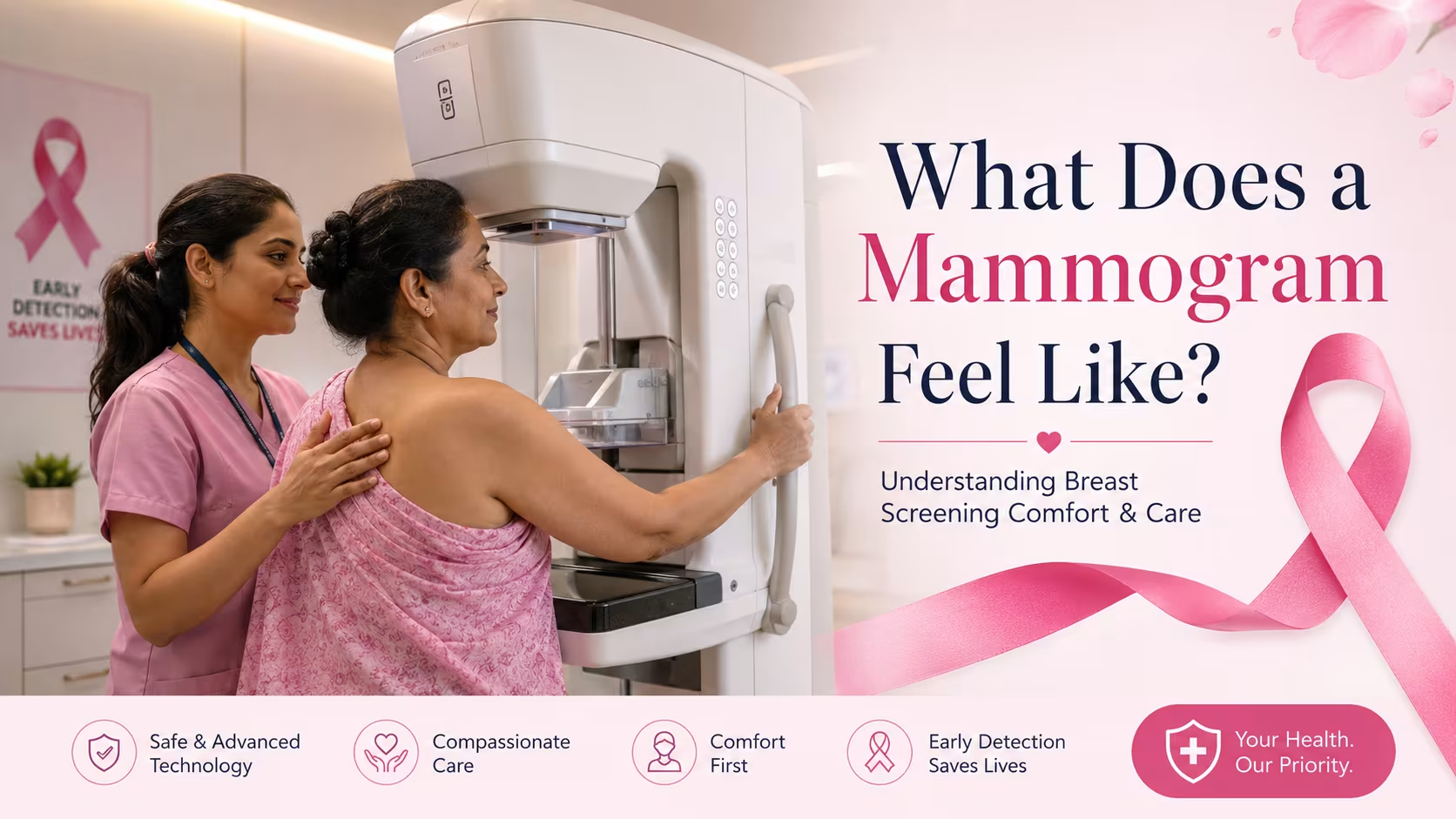
The mammogram is the most common screening tool, but it is also the one that causes the most anxiety because of the “compression” involved.
Understanding Breast Compression
During a mammogram, your breast is placed on a flat plate, and another plastic plate presses down from above. This flattens the tissue so the X-ray can get a clear, detailed image of every layer.
Without this compression, the image might be blurry, and small abnormalities could be missed. It is a necessary part of the process to ensure we provide an accurate diagnosis.
What the Pressure Feels Like
Most women describe the sensation as a “firm squeeze” or a “tight hug” on the breast. It feels like heavy pressure rather than a sharp or stinging pain.
Because the breast is a sensitive organ, this pressure can be uncomfortable for some, but it is controlled and temporary. The machine is designed to apply only the necessary amount of pressure to get a clear picture.
Is Breast Screening Really Painful? The Honest Truth
This is a subjective question because every woman’s body and pain threshold are different. What one person calls “pain,” another might call “mild discomfort.”
Mild Discomfort vs. Pain
For the vast majority of women, breast screening is uncomfortable but not severely painful. It is a temporary sensation that vanishes the moment the machine releases the pressure.
If you do feel sharp or intense pain, you can always tell the technician. They are trained to adjust the positioning or the pressure to make the experience more tolerable for you.
Factors That Affect Your Sensitivity
-
Menstrual Cycle: Your breasts are naturally more tender during the week before your period due to hormonal changes.
-
Breast Density: Women with very dense tissue might feel more pressure as the machine works to get a clear image.
-
Psychological Factors: Anxiety can cause your muscles to tense up, making the compression feel tighter than it actually is.
Breast Ultrasound vs Mammogram Pain: A Comparison
A common question patients ask is about breast ultrasound vs mammogram pain. It is important to know that these tests feel very different.
A breast ultrasound is almost entirely painless. It involves applying a cool or warm gel to the skin and moving a smooth wand (transducer) gently over the breast. There is no compression involved.
However, an ultrasound is usually a supplement to a mammogram, not a replacement. While the ultrasound is more comfortable, the mammogram is better at finding “calcifications”—tiny white spots that can be an early sign of cancer.
📊 Quick Pain Comparison Chart
| Screening Test | What It Feels Like | Pain Level | Why It’s Done |
| Mammogram | Firm pressure/squeeze. | Mild Discomfort | To find tiny calcium spots. |
| Breast Ultrasound | Smooth wand & cool gel. | Usually Painless | To check solid lumps vs cysts. |
| Clinical Exam | Gentle physical exam. | Minimal | Physical assessment. |
| MRI Breast Scan | Lying still in a scanner. | No Pain | High-risk detailed check. |
10 Truths to Make Your Screening More Comfortable

You have more control over your experience than you might think. Here are some practical ways to ensure your screening is as comfortable as possible:
-
Timing is Everything: Schedule your mammogram for the week after your period ends. This is when your breasts are least sensitive.
-
Communicate: Technicians are there to help you. If you are nervous, tell them! They can go slower and talk you through each step.
-
Mind Your Wardrobe: Wear a two-piece outfit (like a top and trousers). You will only need to remove your top, which can make you feel more relaxed.
-
Avoid Deodorant: Deodorants and powders can appear as white spots on the X-ray, leading to retests.
-
Belly Breathing: Practice deep breathing during the test. If you relax your chest muscles, the compression feels much lighter.
-
Skip the Caffeine: Some women find that reducing caffeine for a few days before the test reduces breast tenderness.
-
Ask for Padding: Some clinics offer “cushioning” for mammograms; ask if this is available.
-
Knowledge is Power: Understanding breast ultrasound vs mammogram pain helps you mentally prepare for each sensation.
-
Stay Still: The more still you stay, the faster the technician can get the image, reducing the time of compression.
-
Choose a Specialist: Consulting a female breast cancer specialist in Lucknow like myself ensures you are in a compassionate, understanding environment.
Common Myths About Breast Screening Discomfort
Misinformation is often the root of fear. Let’s clear up some common myths:
-
Myth: “Mammograms are extremely painful and can damage breast tissue.”
-
Fact: The pressure is firm but safe. It does not damage the tissue or cause any long-term harm.
-
-
Myth: “The radiation from a mammogram causes cancer.”
-
Fact: Modern mammograms use very low doses of radiation—roughly the same as what you’d receive on a long-distance flight.
-
-
Myth: “If I don’t have a lump, I don’t need a mammogram.”
-
Fact: Screening is designed to find cancer before a lump can be felt.
-
-
Myth: “Screening can cause cancer to spread.”
-
Fact: This is a dangerous myth. Physical compression cannot cause cancer cells to move or grow.
-
When Should Women Start Regular Screening?

In my experience as a breast cancer specialist in Lucknow, personalized advice is always best. However, general milestones include:
-
Age 40: Most women should start annual or biennial mammograms.
-
High-Risk Groups: If you have a family history of breast cancer (mother or sister), you may need to start screening in your 20s or 30s.
-
Monthly Self-Exams: Women of all ages should perform a self-exam once a month to know their “normal.”
Women consulting Dr. Farah Arshad often receive a personalized screening roadmap that takes their lifestyle, genetics, and age into account.
Warning Signs That Should Never Be Ignored
While breast screening is for women with no symptoms, you should visit a specialist immediately if you notice:
-
A new lump or thickening in the breast or underarm.
-
Changes in the size or shape of the breast.
-
Dimpling or puckering of the skin (like an orange peel).
-
Nipple discharge other than breast milk.
-
A nipple that has turned inward.
-
Persistent pain in one specific spot.
-
Redness or scaly skin on the nipple or breast.
A Real-Life Perspective: Mrs. Sharma’s Story
I remember a patient, Mrs. Sharma, who came to see me in Lucknow. She had delayed her mammogram for five years because a friend told her it felt like “being crushed.” She was visibly shaking in the waiting room.
We sat down and talked through the process. I explained that she was in control. After the test, she looked at me with a surprised smile and said, “Is that it? I was worried for years about something that felt like a tight seatbelt!”
Her results were clear, and the weight she had been carrying—the “worry” of not knowing—was finally gone. This is the peace of mind that a breast health checkup provides.
FAQs: Your Concerns Answered
1. Is breast screening painful for women with small breasts?
Pain is more related to breast density and hormonal cycles than size. Technicians use different plates to accommodate all body types comfortably.
2. How long does the discomfort of a mammogram last?
The actual compression lasts about 10–15 seconds per image. Any lingering sensation usually disappears within a few minutes.
3. Is breast ultrasound a substitute for a mammogram?
No. While an ultrasound is painless, it doesn’t see tiny calcium deposits as well as a mammogram does. Both are often used together for a complete breast health checkup.
4. Can I take a painkiller before the test?
Yes, some women find that taking an over-the-counter pain reliever an hour before the test helps reduce sensitivity.
5. How often should I get screened?
For most women over 40, every 1 to 2 years is recommended. Your specialist will give you a plan based on your risk factors.
6. Can mammograms damage the breast?
No. The plates are designed to apply only the necessary amount of pressure to get a clear X-ray.
7. Does the test hurt more if I have breast implants?
Technicians use special “displacement” views for women with implants. It should not be significantly more painful.
8. Can I bring someone with me?
While you will be alone in the X-ray room, having a friend or family member in the waiting room can provide great emotional support.
9. What should I wear for a mammogram?
Wear a top and skirt/pants. It’s much more convenient than a dress since you only have to undress from the waist up.
10. Where can I find the best breast cancer specialist in Lucknow?
Dr. Farah Arshad is a trusted name in Lucknow, known for her compassionate approach to breast health and advanced screening techniques.
Conclusion: Early Detection is Your Best Protection
Fear of discomfort should never stop you from protecting your future. Is breast screening painful? It is a minor, temporary sensation that offers permanent peace of mind. By taking 20 minutes for a breast health checkup, you are making a commitment to your health and your family.
Early breast cancer detection through regular screening can save lives and significantly improve treatment outcomes. Don’t wait for a symptom to appear.
Consult Dr. Farah Arshad, a dedicated breast cancer specialist in Lucknow, for compassionate care and personalized screening guidance.
👉 Take the first step today. Book your breast health checkup and prioritize your well-being.
