




Breast cancer does not always begin with a painful lump. Subtle signs such as skin dimpling, nipple changes, unusual discharge, persistent breast discomfort, swelling, or changes in breast shape may appear first. Early medical evaluation of these “silent” symptoms significantly improves treatment outcomes and provides more effective options for recovery.
Introduction
Breast cancer is one of the most common health concerns for women globally. However, a significant number of cases are diagnosed in later stages because the early symptoms are often misunderstood. Many women wait for a palpable, painful lump before seeking medical advice. Unfortunately, cancer is frequently painless in its initial phases.
Recognizing the silent signs of breast cancer is essential for every woman. These symptoms can be subtle, appearing as minor changes in skin texture or slight shifts in breast symmetry. Because these changes don’t usually cause immediate distress, they are often dismissed as hormonal fluctuations or signs of aging.
Education is the most powerful tool in the fight against this disease. By understanding what to look for, you can take control of your health. Dr. Farah Arshad, a leading expert, emphasizes that awareness and timely intervention are the cornerstones of successful outcomes. This guide explores the overlooked symptoms that every woman should know.
Why Do Many Women Miss the Early Signs of Breast Cancer?
The primary reason women miss early signs is the absence of pain. In many other health conditions, pain serves as a warning signal that something is wrong. Breast cancer, however, often grows quietly without causing any physical discomfort for a long period. Consequently, women may notice a change but assume it is harmless because it does not hurt.
Another factor is the busy lifestyle that many women lead. Balancing work, family, and personal responsibilities often results in self-care being deprioritized. Small changes, like a slight thickening of the skin or a minor nipple inversion, are easily overlooked during a quick shower. These subtle shifts require focused attention to be detected.
Furthermore, there is a common misconception that all breast lumps are cancerous. Since many women have experienced benign cysts or fibroadenomas, they may assume a new change is just another harmless growth. Consulting a Breast Cancer Specialist in Lucknow can help differentiate between benign conditions and serious concerns through professional evaluation.
Can Breast Cancer Develop Without Pain?
Yes, breast cancer frequently develops without any associated pain. In fact, most malignant lumps are completely painless when they first appear. This is a critical point that healthcare providers try to communicate to their patients. Relying on pain as a diagnostic tool is dangerous and can lead to a delayed diagnosis.
Some types of breast cancer, such as Inflammatory Breast Cancer (IBC), may cause a feeling of heaviness or tenderness. Even then, the sensation is often described as an ache rather than a sharp pain. Because the discomfort is vague, it is frequently mistaken for muscle strain or cyclical hormonal changes related to the menstrual cycle.
It is important to remember that the lack of pain does not equal the absence of risk. Any persistent change in the breast tissue should be evaluated by a professional. Early detection through screening and awareness is the most effective way to identify these painless but significant changes before they progress.
Why Early Detection Saves Lives
Early detection is the single most important factor in increasing the survival rate for breast cancer. When the disease is caught in its earliest stages, it is often localized to the breast tissue. This means it has not yet spread to the lymph nodes or other distant organs, making it much easier to treat.
When cancer is detected early, the treatment options are typically less aggressive. Patients may be candidates for breast-conserving surgery rather than a full mastectomy. Furthermore, the necessity for intensive chemotherapy may be reduced if the cancer is caught before it becomes invasive. This leads to a better quality of life during and after treatment.
Regular screenings and self-examinations allow for the identification of abnormalities that are too small to be felt. By the time a lump is large enough to be palpable, it may have been growing for years. Therefore, staying proactive and visiting a specialist for routine check-ups is a life-saving habit.
What Are the Earliest Silent Signs of Breast Cancer?
The earliest signs of breast cancer are often visual rather than physical sensations. You might notice a slight change in the way your bra fits or a minor indentation when you lift your arms. These signs are “silent” because they do not interfere with daily activities. However, they represent the first physical manifestations of cellular changes.
One such sign is a change in the skin’s appearance, which might look like a small patch of eczema or slight redness. Another early indicator is a change in the nipple’s direction or a slight flattening of the nipple surface. These symptoms are often so minor that they are only visible if you are specifically looking for them during a self-exam.
Dr. Farah Arshad advises women to become familiar with the “normal” look and feel of their breasts. This familiarity makes it much easier to spot even the tiniest discrepancies. If you notice anything that seems “off,” even if it is not a lump, it is time to seek a medical consultation.

Can Breast Cancer Start Without a Lump?
Many people believe that a lump is the only sign of breast cancer, but this is a myth. Some forms of breast cancer, such as Lobular Carcinoma or Inflammatory Breast Cancer, may not form a distinct, hard mass. Instead, they may cause a general thickening of the tissue or a change in the overall density of the breast.
In these cases, the breast might simply feel firmer or “fuller” than usual. This change can be generalized across the entire breast, making it difficult to pinpoint a specific area of concern. Because there is no clear lump to feel, many women delay seeing a doctor until more obvious symptoms appear.
Additionally, certain cancers start deep within the milk ducts. These may only be detectable through imaging like mammography or ultrasound before they ever become a palpable mass. This highlights why clinical exams and professional screenings are vital components of breast health, as they look beyond what the hand can feel.
Which Symptoms Are Most Commonly Ignored?
Symptoms that mimic common, non-cancerous conditions are the ones most frequently ignored. For example, skin irritation or redness is often dismissed as an allergic reaction to a new laundry detergent or soap. Similarly, a small rash around the nipple might be mistaken for a fungal infection or simple dryness.
Nipple discharge is another symptom that women often rationalize. While discharge can be caused by hormonal shifts or benign cysts, it can also be a sign of early-stage cancer. If the discharge occurs without squeezing the nipple or if it is bloody or clear, it should never be ignored.
Finally, slight swelling in the armpit or around the collarbone is often neglected. These areas contain lymph nodes, which are the first place breast cancer typically spreads. Persistent swelling in these regions, even in the absence of a breast lump, is a significant warning sign that requires immediate investigation.
What Breast Changes Should Never Be Ignored?
While the breasts change naturally with age and hormonal cycles, certain shifts are red flags. Consistency is key; if a change does not go away after your next period, it needs professional attention. Identifying these changes early can lead to more successful interventions.
Changes in Breast Size or Shape
It is normal for one breast to be slightly larger than the other. However, if you notice a sudden or recent change in the size or shape of one breast, it is a cause for concern. This might manifest as one breast appearing lower than the other or a visible swelling in one specific area.
Skin Dimpling or Thickening
Skin dimpling is often compared to the texture of an orange peel. If you see small indentations or “pits” on the skin of your breast, this could indicate that a tumor is pulling on the underlying tissue. Similarly, a patch of skin that feels thicker or more leather-like than the surrounding area should be checked.
Persistent Breast Swelling
Swelling that affects part or all of the breast, even if no lump is felt, is a serious symptom. This can sometimes make the skin feel tight or look shiny. Persistent swelling that does not fluctuate with your menstrual cycle is an indicator that the lymphatic system may be affected.
One Breast Looking Different Than the Other
Asymmetry that develops suddenly is a silent sign many women miss. If one breast begins to point in a different direction or develops a bulge that wasn’t there before, it should be evaluated. Dr. Farah Arshad notes that visual changes are just as significant as physical lumps in the diagnostic process.
Can Nipple Changes Be an Early Warning Sign?
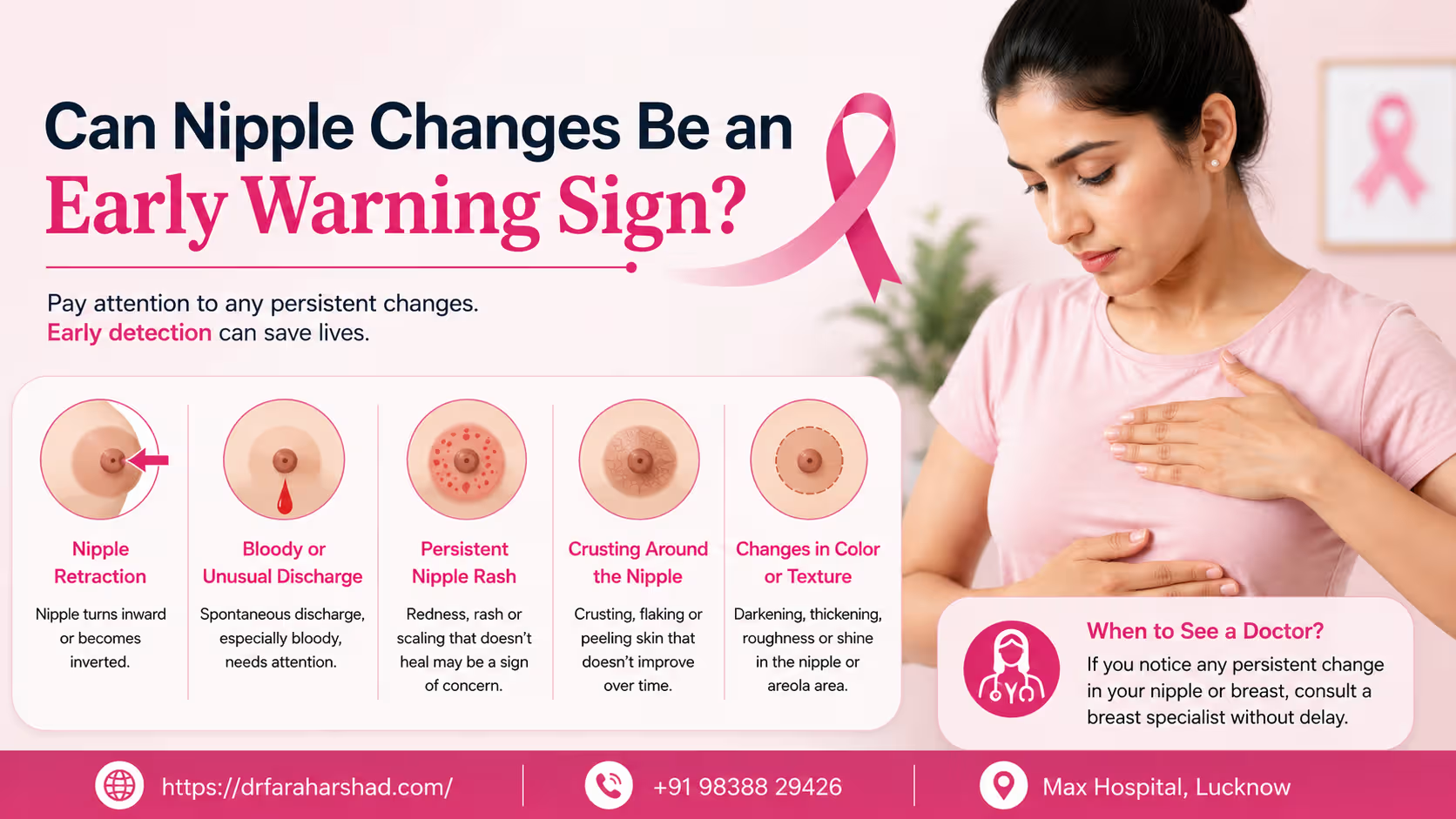
The nipple and areola are highly sensitive to changes in the underlying breast tissue. Because the milk ducts terminate at the nipple, many early-stage cancers show their first signs here. Paying close attention to this area during self-exams is crucial.
Nipple Retraction
If a nipple that used to point outward begins to pull inward or becomes inverted, this is known as nipple retraction. This happens when a growth deep inside the breast pulls on the ducts. Unless your nipples have always been inverted, this is a symptom that requires a prompt medical visit.
Bloody or Unusual Nipple Discharge
While some discharge can be normal, spontaneous discharge is generally a concern. Clear or bloody fluid leaking from the nipple without any pressure is particularly significant. This symptom often points to an abnormality within the ductal system that needs to be imaged and tested.
Persistent Nipple Rash
A rash, redness, or scaling on the nipple that does not heal with topical creams can be a sign of Paget’s disease of the breast. This is a rare form of cancer that starts in the nipple ducts. It is frequently misdiagnosed as psoriasis or eczema, leading to dangerous delays in treatment.
Crusting Around the Nipple
If you notice persistent crusting, oozing, or small sores on the nipple or areola, do not wait for them to go away. These changes are often painless but indicate that the skin cells are being affected by an underlying process. A specialist can perform a biopsy to rule out malignancy.
Does Breast Cancer Always Cause Pain?
The short answer is no. Most breast cancers do not cause pain in their early stages. Pain is actually more commonly associated with benign conditions like cysts, hormonal changes, or mastitis. However, the absence of pain should never be used as a reason to delay a medical exam.
When pain does occur with cancer, it is usually persistent and not related to the menstrual cycle. It may feel like a constant tugging or a deep-seated ache in one specific spot. If you experience localized pain that does not resolve within a few weeks, it is worth discussing with a doctor.
The misconception that “cancer hurts” is one of the biggest hurdles in early diagnosis. By the time a breast tumor causes significant pain, it has often grown large enough to press against nerves or the chest wall. The goal of modern medicine is to find and treat the disease long before it reaches that stage.
Can Changes in the Skin Indicate Breast Cancer?
The skin of the breast can provide many clues about what is happening underneath. Because breast tissue is relatively close to the surface, tumors can cause visible changes to the skin’s texture and color. These signs are often the “silent” warnings that women overlook.
Orange Peel (Peau d’Orange) Skin
The term “peau d’orange” is French for “orange peel.” It describes skin that becomes thick, pitted, and firm. This happens when cancer cells block the small lymphatic vessels in the skin. This is a classic sign of inflammatory breast cancer and should be treated as a medical emergency.
Redness or Persistent Irritation
While redness can be a sign of a simple infection (mastitis), it can also indicate cancer if it does not respond to antibiotics. If your breast looks red, feels warm, or appears swollen, and these symptoms persist, you need an urgent evaluation. Inflammatory cancer can mimic an infection very closely.
Non-Healing Skin Changes
Any sore or ulcer on the breast that does not heal within a week or two is a concern. This includes small “pimples” that bleed or scabs that keep coming back. These are not always simple skin issues; they can be signs that a tumor is breaking through the skin surface.
Normal Skin Changes vs. Breast Cancer Warning Signs
| Feature | Normal/Benign Changes | Breast Cancer Warning Signs |
| Texture | Smooth or slightly stretched | Pitted like an orange peel (dimpling) |
| Color | Uniform or slight cyclical redness | Persistent redness, purple hue, or darkening |
| Sensation | General tenderness or itching | Localized ache or no pain at all |
| Healing | Scratches/rashes heal in days | Sores or scales that do not heal |
| Symmetry | Usually affects both breasts | Usually affects only one breast |
Who Is at Higher Risk of Developing Breast Cancer?
Understanding your risk profile is a key part of proactive health management. While any woman can develop breast cancer, certain factors increase the likelihood. Identifying these risks helps doctors determine how often you should be screened and which tests are most appropriate.
Family History
A strong family history of breast or ovarian cancer is a major risk factor. This is especially true if a close relative, such as a mother or sister, was diagnosed before the age of 50. If you have a family history, your doctor may suggest earlier or more frequent screenings.
Increasing Age
The risk of breast cancer increases as you get older. Most cases are diagnosed in women over the age of 50. However, young women are not immune. Women of all ages need to remain vigilant and report any changes to their physician immediately.
Genetic Mutations
About 5% to 10% of breast cancers are linked to inherited gene mutations. The most well-known are the BRCA1 and BRCA2 genes. Women who carry these mutations have a significantly higher lifetime risk of developing both breast and ovarian cancers. Genetic counseling is available for those with high-risk backgrounds.
Hormonal Factors
Long-term exposure to estrogen can influence breast cancer risk. This includes starting menstruation at an early age (before 12) or entering menopause at a later age (after 55). Additionally, the use of certain types of hormone replacement therapy (HRT) after menopause may contribute to increased risk.
Lifestyle Risk Factors
Several lifestyle choices can impact your risk levels. These include high alcohol consumption, smoking, and being overweight after menopause. Regular physical activity and a balanced diet are recommended by experts like Dr. Farah Arshad to help maintain overall breast health and reduce risk.
How Is Breast Cancer Diagnosed?
When a symptom is identified, doctors use a “triple assessment” approach to reach a diagnosis. This involves a physical exam, imaging, and, if necessary, a tissue sample. Modern diagnostic tools are highly accurate and can detect even the smallest abnormalities.
Clinical Breast Examination
The first step is a thorough physical examination by a specialist. The doctor will feel for lumps and check the lymph nodes under the arms and around the collarbone. They will also look for any of the visual silent signs mentioned earlier, such as skin dimpling or nipple changes.
Mammography
Mammography is the gold standard for breast cancer screening. It uses low-dose X-rays to create images of the breast tissue. It can often detect tumors that are too small to be felt by hand. For many women, an annual mammogram is the most effective way to catch cancer early.
Breast Ultrasound
A Breast Ultrasound uses sound waves to create images of the internal structures of the breast. It is particularly useful for distinguishing between solid masses and fluid-filled cysts. It is often used as a follow-up to a mammogram or for women with dense breast tissue.
MRI
A breast MRI (Magnetic Resonance Imaging) provides highly detailed images. It is usually reserved for women at very high risk or to determine the extent of the disease once cancer has been diagnosed. It can sometimes find abnormalities that are not visible on a mammogram or ultrasound.
Biopsy
A Biopsy is the only way to confirm if a change is actually cancer. During this procedure, a small sample of tissue or fluid is removed from the suspicious area. A pathologist then examines the cells under a microscope to determine if they are malignant or benign.
Comparison of Common Breast Diagnostic Tests
| Test Name | How It Works | When It Is Recommended |
| Mammography | X-ray imaging | Routine screening for women over 40 |
| Ultrasound | Sound waves | Evaluating a felt lump or dense tissue |
| MRI Breast | Magnetic fields | High-risk screening or staging of cancer |
| Biopsy | Tissue sampling | To confirm or rule out cancer cells |
What Are the Modern Treatment Options for Breast Cancer?
Advancements in medical science have led to highly effective and less invasive treatment options. The goal of modern Breast Cancer Treatment is to eradicate the cancer while preserving as much healthy tissue and function as possible.
Breast-Conserving Surgery
Also known as a lumpectomy, this procedure involves removing only the tumor and a small margin of surrounding healthy tissue. This allows the patient to keep most of their natural breast. It is typically followed by radiation therapy to ensure no microscopic cells remain.
Mastectomy
In some cases, removing the entire breast (mastectomy) is the safest option. This may be necessary if the tumor is large or if there are multiple areas of cancer. Modern surgical techniques often allow for immediate breast reconstruction, helping women maintain their body image.
Chemotherapy
Chemotherapy uses powerful drugs to kill rapidly dividing cancer cells throughout the body. It is often used after surgery to reduce the risk of the cancer returning. In some cases, it is given before surgery to shrink a large tumor, making it easier to remove.
Radiation Therapy
Radiation therapy uses high-energy beams to target and destroy any remaining cancer cells in the breast or underarm area. It is a localized treatment that is essential after breast-conserving surgery to prevent recurrence.
Hormone Therapy
Many breast cancers are fueled by hormones like estrogen. Hormone therapy involves taking medications that block these hormones or lower their levels in the body. This is a very effective long-term strategy for “hormone receptor-positive” cancers.
Targeted Therapy
Targeted therapies are drugs designed to attack specific proteins on cancer cells, such as HER2. Unlike chemotherapy, these drugs are more precise and often have fewer side effects. They represent a significant breakthrough in treating aggressive forms of the disease.
Can Breast Cancer Be Detected Before Symptoms Appear?
The most effective way to beat breast cancer is to find it before you can even see or feel it. This is the primary purpose of regular screening. Screening tests can identify cellular changes or tiny masses years before they would naturally become noticeable.
Why Regular Screening Matters
Screening saves lives by shifting the diagnosis from a symptomatic stage to an asymptomatic stage. When cancer is found during a routine screen, it is almost always smaller and easier to treat. This proactive approach significantly reduces the mortality rate associated with the disease.
When Should Women Start Mammography?
Most health organizations recommend that women at average risk begin annual mammograms at age 40. However, if you have a family history or other risk factors, you may need to start earlier. It is best to discuss a personalized screening schedule with your doctor.
How Often Should Breast Examinations Be Done?
Women should perform a breast self-examination once a month, ideally a few days after their period ends. Additionally, a clinical breast exam by a healthcare provider should be part of your annual physical. These regular checks help you stay “breast aware” and notice changes quickly.
When Should You Consult a Breast Cancer Specialist?
You should consult a specialist the moment you notice any persistent change in your breasts. Do not wait for your next scheduled check-up if you find a lump, skin change, or nipple discharge. Prompt action is the most important step in protecting your health.
Which Symptoms Require Immediate Medical Attention?
A new lump that feels hard or fixed, spontaneous nipple discharge, and skin dimpling are symptoms that require immediate evaluation. Additionally, any redness or swelling that looks like an infection but does not improve with standard care should be checked by a Breast Cancer Doctor in Lucknow.
When Should You Seek a Second Opinion?
If you feel your concerns are being dismissed or if you want to explore all available treatment options, seeking a second opinion is a wise choice. A specialist like Dr. Farah Arshad can provide a comprehensive evaluation and peace of mind through expert analysis.
Expert Insights
Dr. Farah Arshad, an experienced Best Breast Surgeon in Lucknow, encourages women to perform regular breast self-examinations and undergo age-appropriate screening. She emphasizes that you should never ignore persistent breast changes, even if they are painless.
“Many patients tell me they noticed a change months ago but didn’t think it was serious because it didn’t hurt,” says Dr. Arshad. “My goal is to help women understand that the silent signs are just as important as a lump. Early diagnosis offers the best chance of recovery and the most options for treatment.”
Ignoring small changes can delay a diagnosis by months, allowing the cancer to grow or spread. Being proactive is not about being fearful; it is about being empowered. By listening to your body and seeking professional help early, you take the most important step toward a long and healthy life.
Key Takeaways
-
Breast Cancer Doesn’t Always Cause Pain: Relying on pain to signal trouble is a mistake; silent signs are more common.
-
Early Symptoms Can Be Very Subtle: Look for skin dimpling, nipple inversion, or slight changes in breast shape.
-
Screening Detects Cancer Earlier: Mammograms can find tumors long before they can be felt by hand.
-
Timely Treatment Improves Survival: The earlier the diagnosis, the higher the success rate and the simpler the treatment.
-
Never Ignore Persistent Changes: If a change lasts more than one menstrual cycle, see a specialist immediately.
Conclusion
Breast cancer is a formidable challenge, but it can be managed effectively through awareness and early action. By understanding the silent signs that most women miss, you are better equipped to protect your health. Symptoms like skin dimpling, nipple retraction, and unusual discharge are the body’s way of asking for attention.
Do not let fear or a busy schedule prevent you from seeking medical advice. If you notice any unusual breast changes, consult Dr. Farah Arshad for a timely and thorough evaluation. As a dedicated Breast Cancer Specialist in Lucknow, she provides the expertise and care needed to navigate your breast health journey with confidence. Remember, early detection is your greatest ally.
FAQs
Q1.What are the first silent signs of breast cancer?
The first silent signs include skin dimpling, nipple retraction, unusual discharge, or a change in the breast’s shape. These symptoms often appear without any pain or a palpable lump, making them easy to overlook during a casual observation.
Q2.Can breast cancer occur without a lump?
Yes, some types of breast cancer, like inflammatory or lobular carcinoma, may cause tissue thickening or skin changes rather than a distinct lump. This is why visual self-exams and professional screenings are so important for detection.
Q3.Does breast cancer always cause pain?
No, breast cancer is usually painless in its early stages. Pain is more frequently associated with benign conditions like cysts. However, any persistent, localized pain should still be evaluated by a medical professional to rule out malignancy.
Q4.What breast changes should never be ignored?
You should never ignore a new lump, skin pitting (orange peel texture), nipple discharge, redness that doesn’t go away, or a change in how the nipple looks. Any change that persists for more than a few weeks requires an expert’s opinion.
Q5.At what age should women start breast cancer screening?
Most women at average risk should start annual mammography at age 40. However, those with a strong family history or genetic markers like BRCA1 should consult a specialist to begin screenings much earlier, often in their 30s.
Q6.How often should I perform a breast self-examination?
You should perform a breast self-examination once every month. It is best to do this a few days after your period ends, when your breasts are least likely to be swollen or tender due to hormonal shifts.
Q7.Which test is best for detecting breast cancer early?
A mammogram is the best tool for early detection in most women. However, a doctor may also recommend a breast ultrasound or MRI if you have dense breast tissue or a high genetic risk for the disease.
Q8.Can young women develop breast cancer?
Yes, while the risk increases with age, young women can develop breast cancer. These cases are often more aggressive, which makes it even more important for younger women to report any unusual breast changes to their doctor immediately.
Q9.When should I consult a breast cancer specialist?
Consult a Breast Cancer Doctor in Lucknow immediately if you notice a new lump, skin changes, nipple inversion, or spontaneous discharge. Early consultation ensures that any issues are caught at the most treatable stage.
Q10.Can breast cancer be treated successfully if detected early?
Yes, breast cancer has an exceptionally high survival rate when detected in its early stages. Early diagnosis allows for more effective, less invasive treatment options and a much faster return to a normal, healthy life.
