



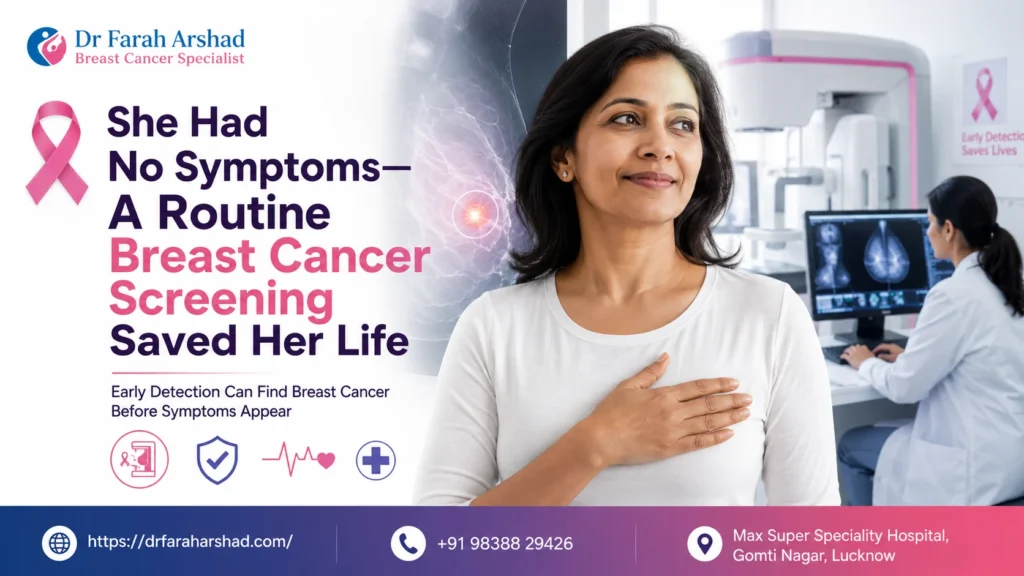
“Doctor, I almost didn’t come today. I feel completely fine.”
As a Breast Cancer Specialist in Lucknow, this is a sentence I hear surprisingly often.
Many women believe that breast cancer always begins with a painful lump, obvious swelling, or noticeable changes in the breast. Unfortunately, that isn’t always true. Some of the most treatable breast cancers are discovered in women who have no symptoms at all.
There is no pain.
No lump.
No nipple discharge.
No visible change.
And yet, a routine screening reveals something that would otherwise have remained hidden.
That is why breast cancer screening is one of the most powerful tools in modern medicine. It is not designed for women who already suspect they have cancer—it is meant for women who feel perfectly healthy.
In my practice, I have met women who scheduled a mammogram simply because it was part of a routine health check-up or because a friend encouraged them to get screened. Some expected to be told that everything looked normal. Instead, imaging detected tiny abnormalities that could not be felt during self-examination. Because these changes were found early, treatment could begin before the disease became advanced.
This is the true purpose of screening—not to create fear, but to find cancer before cancer finds a way to announce itself.
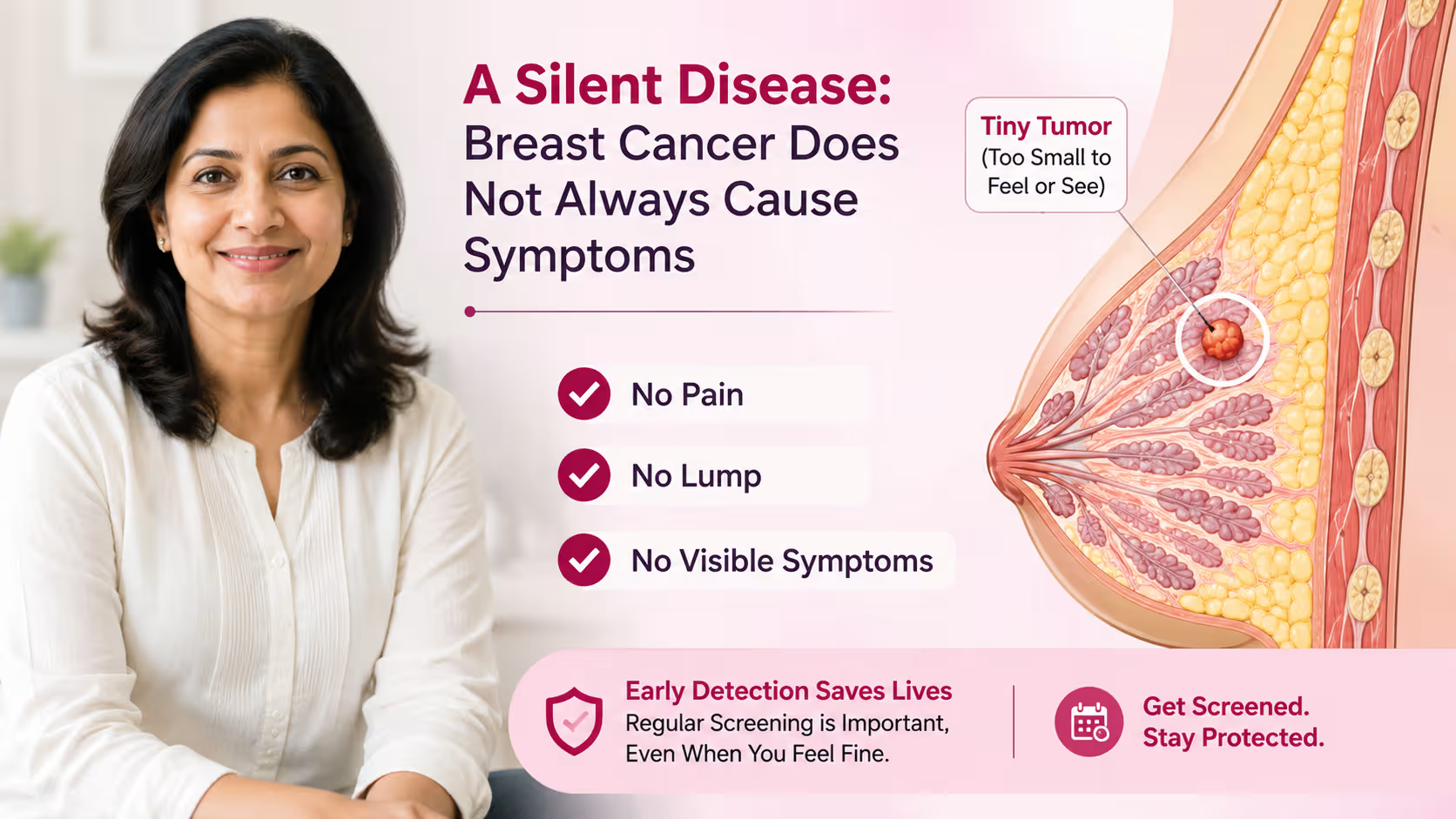
A Silent Disease: Breast Cancer Does Not Always Cause Symptoms
One of the biggest myths surrounding breast cancer is:
“If I don’t feel anything unusual, I don’t need to worry.”
The reality is very different.
Early-stage breast cancer often develops quietly. A tumor may be only a few millimeters in size—too small to cause pain or to be felt with the fingers.
In fact, many early breast cancers are first detected during routine mammography because the scan can identify tiny abnormalities, such as suspicious calcifications or small masses, long before they become noticeable.
This is exactly why screening saves lives.
Waiting for symptoms may mean waiting until the cancer has had more time to grow.
Breast Cancer by the Numbers: Why Screening Matters
The importance of screening is supported by decades of medical research.
Consider these facts:
- According to the World Health Organization (WHO), breast cancer is the most commonly diagnosed cancer among women worldwide.
- Studies have shown that organized mammography screening can detect breast cancer before symptoms appear, often leading to earlier treatment and improved outcomes.
- Early-stage breast cancers generally have a much better prognosis than cancers diagnosed after they have spread to lymph nodes or distant organs.
- Importantly, most women diagnosed with breast cancer do not have a strong family history, which means every woman should be aware of her individual screening needs—not only those with affected relatives.
These facts reinforce a simple message:
Feeling healthy is not a reliable way to rule out breast cancer.
Why Breast Cancer Screening Matters Even When You Feel Perfectly Healthy
Screening is fundamentally different from diagnostic testing.
A woman with symptoms undergoes tests because there is already a concern.
A woman without symptoms undergoes screening because the goal is to find disease before symptoms ever appear.
Think of screening as preventive healthcare.
Just as blood pressure checks can detect hypertension before complications occur, breast cancer screening can identify abnormalities before they become life-threatening.
Early detection gives doctors more choices.
It often gives patients more hope.
The Difference Between Screening and Waiting for Symptoms
Imagine two women of the same age.
Both are healthy.
Both have busy lives.
Only one schedules routine breast cancer screening.
| Routine Screening | Waiting for Symptoms |
|---|---|
| Cancer detected while very small | Cancer discovered after a lump develops |
| More treatment options | Treatment may become more extensive |
| Higher possibility of breast-conserving surgery | Larger tumors may require more complex surgery |
| Lower likelihood of lymph node involvement | Greater risk that cancer has already spread locally |
| Earlier recovery planning | Longer and more intensive treatment journey |
One appointment can completely change the course of treatment.
The Powerful Reality Behind Early Detection
Every breast surgeon has seen patients whose outcomes were changed simply because cancer was detected early.
Sometimes a mammogram identifies tiny calcium deposits.
Sometimes it reveals a small shadow that cannot even be felt by examination.
Further evaluation confirms an early-stage cancer.
Instead of treating an advanced disease months later, doctors can begin treatment immediately.
That difference in timing can influence:
- Surgical options
- Recovery
- Cosmetic outcomes
- Treatment planning
- Long-term prognosis
This is why breast cancer screening is considered one of the most valuable advances in women’s health.
What I Tell My Patients About Breast Cancer Screening
One question I frequently hear is:
“Doctor, if I had cancer, wouldn’t I know it?”
My answer is always honest.
Not necessarily.
Pain is not the earliest sign of breast cancer.
Many breast cancers do not hurt.
Likewise, not every breast lump is cancer, and not every cancer forms a lump that you can feel.
I encourage my patients to think of screening as an investment in their future health—not because I expect every woman to have cancer, but because finding cancer early offers the greatest opportunity for successful treatment.
When women understand this difference, they are far more likely to prioritize regular screening instead of waiting for symptoms.
Can You Have Breast Cancer Without a Lump?
Yes. One of the most surprising facts about breast cancer is that not every woman develops a noticeable lump in the early stages.
Some breast cancers begin deep within the breast tissue and remain too small to be felt during a self-examination or even a clinical breast examination. In other cases, the earliest sign may be tiny calcium deposits (microcalcifications) or subtle tissue changes that are visible only on a mammogram.
This is why many women diagnosed through routine screening say they were completely shocked—they had no pain, no lump, and no visible breast changes.
Key Takeaway:
The absence of a lump does not always mean the absence of breast cancer.
Read Related blog here: https://drfaraharshad.com/breast-lump-causes-symptoms-diagnosis/
Can Mammography Detect Breast Cancer Before Symptoms Appear?
Yes. Mammography is specifically designed to detect breast abnormalities before they become noticeable.
It can identify:
- Tiny tumors that cannot be felt by hand
- Suspicious microcalcifications
- Early structural changes in breast tissue
- Small masses hidden within dense breast tissue (sometimes requiring additional imaging)
Detecting these abnormalities early allows doctors to investigate further and, if necessary, begin treatment at a stage when outcomes are generally much better.
This is one of the biggest reasons why routine breast cancer screening has helped reduce deaths from breast cancer in many countries.
Why Early Detection Changes Everything
When breast cancer is diagnosed at an early stage, treatment often becomes more effective and less physically demanding.
Early detection may allow for:
- Breast-conserving surgery instead of more extensive surgery in suitable cases
- Smaller surgical incisions
- Lower risk of lymph node involvement
- More personalized treatment options
- Faster physical recovery
- Better cosmetic outcomes
- Improved long-term survival
Early detection is not simply about finding cancer earlier—it is about giving patients more choices throughout their treatment journey.
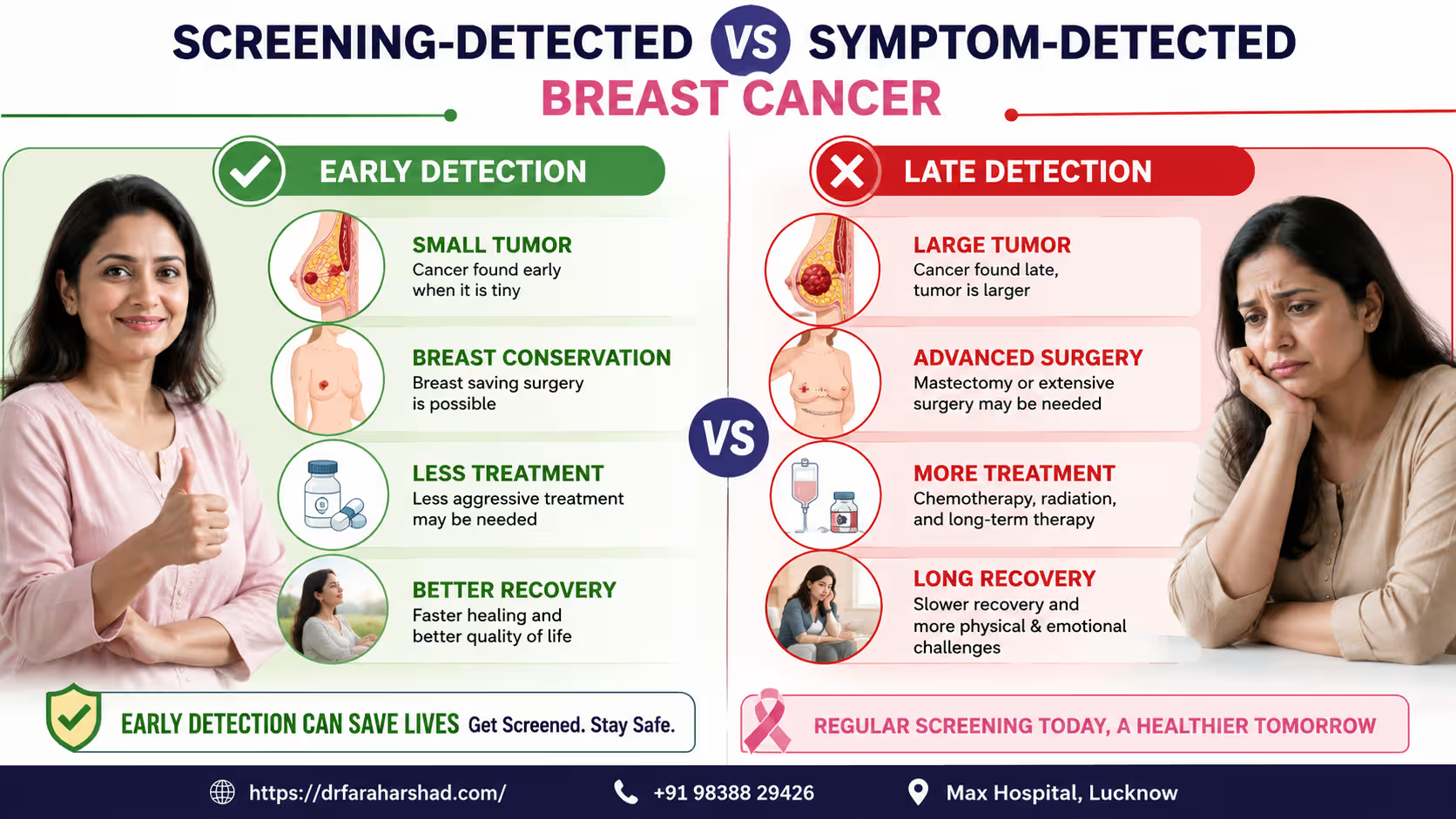
Screening-Detected Breast Cancer vs Symptom-Detected Breast Cancer
| Cancer Found Through Routine Screening | Cancer Found After Symptoms Develop |
|---|---|
| Often detected before a lump forms | Usually detected after a lump or other symptoms appear |
| Smaller tumor size | Larger tumor size |
| Greater chance of breast conservation | More extensive surgery may be required in some cases |
| Lower likelihood of lymph node involvement | Higher chance of local spread |
| More treatment options | Treatment planning may become more complex |
| Better overall prognosis in many cases | May require longer treatment depending on stage |
Remember: Every breast cancer is unique. The stage, tumor biology, and overall health of the patient all influence treatment decisions.
Why Many Women Delay Breast Cancer Screening
Despite increasing awareness, many women postpone screening until they notice symptoms. Unfortunately, this delay can reduce the opportunity for early diagnosis.
The most common reasons include:
“I Feel Perfectly Healthy.”
This is the most common misconception.
Breast cancer can remain silent for months or even years before symptoms become noticeable.
Fear of Finding Something Serious
Many women avoid screening because they are afraid of receiving bad news.
However, delaying screening does not prevent cancer—it only delays diagnosis if cancer is present.
A Busy Lifestyle
Between work, family responsibilities, and caring for others, women often postpone their own health.
Unfortunately, breast cancer does not wait for a convenient time.
Fear That Mammography Is Painful
Most women describe mammography as briefly uncomfortable rather than painful.
The compression lasts only a few seconds and is necessary to obtain clear images.
For most women, the short-lived discomfort is far outweighed by the potential benefit of early detection.
“No One in My Family Has Breast Cancer.”
Another common myth is that only women with a family history develop breast cancer.
In reality, many women diagnosed with breast cancer have no significant family history.
That is why routine screening recommendations are based on individual risk assessment, not family history alone.
Who Should Consider Breast Cancer Screening?
The right screening schedule depends on your age, medical history, and personal risk factors. Instead of following generalized advice from social media or friends, discuss your individual screening needs with a qualified breast specialist.
Women who should especially consider discussing screening include those who:
- Are getting older, as the risk of breast cancer increases with age.
- Have a mother, sister, daughter, or other close relative diagnosed with breast or ovarian cancer.
- Have previously had an abnormal mammogram or breast biopsy.
- Have dense breast tissue, which may make some cancers harder to detect on routine mammography.
- Carry certain inherited genetic mutations, such as BRCA1 or BRCA2.
- Have received chest radiation at a young age.
- Have a personal history of breast disease.
An individualized screening plan helps ensure that women receive the most appropriate tests at the right time.
Common Warning Signs of Breast Cancer
Although breast cancer may not cause symptoms initially, it is important to seek medical evaluation if you notice any of the following:
- A new breast lump or thickening.
- Changes in the size or shape of one breast.
- Persistent breast swelling.
- Skin dimpling or puckering (sometimes described as an “orange peel” appearance).
- Nipple inversion that is new.
- Bloody or spontaneous nipple discharge.
- Persistent redness or scaling of the nipple or breast skin.
- A sore or ulcer on the breast that does not heal.
- Swelling or a lump in the armpit.
- Persistent breast pain associated with other concerning changes.
Most of these symptoms are not necessarily caused by breast cancer, but they should always be evaluated by a healthcare professional.
Can Younger Women Get Breast Cancer?
Yes. While breast cancer is more common with increasing age, younger women can also develop breast cancer.
Women under 40 may have a higher risk if they:
- Have a strong family history of breast or ovarian cancer.
- Carry inherited genetic mutations.
- Have previously received chest radiation.
- Have certain hereditary cancer syndromes.
Younger women should not ignore persistent breast changes simply because they believe they are “too young” to develop breast cancer.
If you notice anything unusual, seek medical advice promptly.
Is Breast Cancer Screening Painful?
This is one of the most frequently asked questions.
For most women, the answer is no.
During a mammogram, the breast is gently compressed between two plates for a few seconds to produce clear images.
Some women experience temporary discomfort, while others feel only mild pressure.
The procedure is brief, and the discomfort usually disappears immediately afterward.
Scheduling the examination after your menstrual period may help reduce breast tenderness for some women.
Modern Breast Cancer Treatment Offers More Hope Than Ever
Hearing the words “You have breast cancer” can be overwhelming. However, one of the most important messages I share with my patients is this:
Breast cancer is no longer treated with a one-size-fits-all approach.
Over the past two decades, breast cancer treatment has advanced significantly. Today, treatment plans are personalized based on the type of cancer, stage of the disease, tumor biology, genetic profile, overall health, and the patient’s individual preferences.
Depending on the diagnosis, treatment may include:
- Breast-conserving surgery (Lumpectomy)
- Mastectomy when necessary
- Oncoplastic breast surgery to preserve breast appearance
- Sentinel lymph node biopsy
- Chemotherapy
- Radiation therapy
- Hormone (Endocrine) therapy
- Targeted therapy
- Immunotherapy for selected patients
The encouraging news is that when breast cancer is detected early through routine screening, many women have more treatment options and, in suitable cases, may avoid more extensive procedures.
Why Choosing the Right Breast Cancer Specialist Matters
Breast cancer care is not just about removing a tumor—it’s about making thoughtful decisions that affect a woman’s health, confidence, and quality of life for years to come.
An experienced breast specialist evaluates several factors before recommending treatment, including:
- The stage of the cancer
- Tumor size and location
- Hormone receptor status
- HER2 status
- Lymph node involvement
- Breast size and anatomy
- The patient’s age and future goals
- Overall physical and emotional well-being
Every patient deserves a treatment plan tailored to her unique situation rather than a generalized approach.
If you are looking for a Breast Cancer Specialist in Lucknow, choose a surgeon with dedicated training and experience in breast diseases, breast cancer surgery, and evidence-based treatment planning.
Dr. Farah Arshad’s Approach to Breast Care
As a Female Breast Cancer Surgeon in Lucknow, Dr. Farah Arshad believes that informed patients make better healthcare decisions.
Her approach goes beyond surgery. She focuses on helping women understand:
- Their diagnosis in simple, easy-to-understand language.
- All available treatment options.
- The benefits and limitations of each treatment.
- The importance of early detection and regular follow-up.
- Breast-conserving options whenever medically appropriate.
With specialized training in Breast and Endocrine Surgery, Dr. Farah Arshad provides comprehensive care for both benign breast conditions and breast cancer, ensuring that every patient receives evidence-based, compassionate, and personalized treatment.
Her areas of expertise include:
- Early Breast Cancer
- Advanced Breast Cancer
- Breast-Conserving Surgery
- Oncoplastic Breast Surgery
- Benign Breast Lumps
- Fibroadenoma
- Breast Pain Evaluation
- Nipple Disorders
- High-Risk Breast Assessment
- Breast Cancer Screening and Early Detection
Her philosophy is simple:
“The earlier breast cancer is detected, the more opportunities we have to treat it effectively while preserving both health and quality of life.”
Do Not Wait for Symptoms
One of the biggest mistakes women make is assuming that no symptoms mean no disease.
Breast cancer often develops silently.
By the time a lump becomes obvious or other symptoms appear, the disease may already be at a more advanced stage.
Routine breast cancer screening gives doctors the opportunity to identify abnormalities before they become visible or noticeable.
If you:
- Are eligible for routine screening,
- Have a family history of breast or ovarian cancer,
- Notice any new breast changes,
- Have been advised to undergo mammography,
do not postpone your appointment.
Taking one hour for a screening today may help protect your health for years to come.
Frequently Asked Questions (FAQs)
1. If I don’t have any symptoms, do I still need breast cancer screening?
Yes. Many early-stage breast cancers do not cause pain, lumps, or visible changes. Routine screening is designed to detect cancer before symptoms develop, when treatment is often more effective.
2. Does a normal breast self-examination mean I don’t need a mammogram?
No. Breast self-examinations help women become familiar with their breasts, but they cannot replace screening mammography. Some cancers are too small or too deep within the breast tissue to be felt by hand.
3. Is mammography safe?
Yes. Mammography uses a very low dose of radiation, and for most women, the benefits of detecting breast cancer early greatly outweigh the minimal risks associated with the examination.
4. What should I do if my mammogram shows an abnormality?
An abnormal mammogram does not automatically mean breast cancer. Many findings turn out to be benign. Your doctor may recommend additional imaging or a biopsy to determine the exact cause.
5. When should I consult a Breast Cancer Specialist in Lucknow?
You should consult a Breast Cancer Specialist in Lucknow if you:
- Notice a new breast lump.
- Experience nipple discharge, especially if it is bloody.
- Observe changes in breast shape or skin.
- Have persistent breast pain associated with other symptoms.
- Have a strong family history of breast or ovarian cancer.
- Need guidance regarding breast cancer screening based on your age and personal risk.
Early consultation helps ensure accurate diagnosis and timely treatment if needed.
About the Author
Dr. Farah Arshad – Breast Cancer Specialist in Lucknow
Dr. Farah Arshad is a highly experienced Breast Cancer Specialist in Lucknow, dedicated exclusively to the diagnosis and treatment of breast diseases.
She has received advanced training in Breast and Endocrine Surgery, including a Fellowship in Breast Surgery from Singapore General Hospital, one of Asia’s leading centers for breast care. Over the years, she has helped countless women navigate breast health concerns ranging from benign breast conditions to complex breast cancer treatment.
Her clinical expertise includes:
- Breast Cancer Surgery
- Breast-Conserving Surgery
- Oncoplastic Breast Surgery
- Fibroadenoma Treatment
- Benign Breast Diseases
- Breast Pain Evaluation
- High-Risk Breast Assessment
- Breast Cancer Screening
- Early Detection Programs
Dr. Farah Arshad is committed to combining evidence-based medicine, compassionate care, and patient education so that women can make informed decisions about their breast health with confidence.
Medical References
The information in this article is based on recommendations and evidence from internationally recognized medical organizations, including:
- World Health Organization (WHO) – Breast Cancer Fact Sheets
- American Cancer Society (ACS) – Breast Cancer Screening Guidelines
- National Comprehensive Cancer Network (NCCN) – Clinical Practice Guidelines in Oncology: Breast Cancer Screening and Diagnosis
- Indian Council of Medical Research (ICMR) – National Cancer Screening Recommendations
- European Society for Medical Oncology (ESMO) – Early Breast Cancer Clinical Practice Guidelines
This article is intended for educational purposes only and should not replace professional medical consultation. Screening recommendations vary based on individual risk factors, age, family history, and overall health. Please consult a qualified healthcare professional for personalized advice.
Conclusion
The story behind the title is one that breast specialists see time and again: a woman who feels perfectly healthy attends a routine screening, only to discover a breast cancer that had given no warning signs. While every patient’s journey is unique, the lesson is universal-breast cancer does not always announce itself with pain or a lump.
Routine breast cancer screening offers the opportunity to detect abnormalities at a stage when treatment is often more effective and less invasive. It is one of the most powerful steps a woman can take to protect her long-term health.
If you have questions about your personal risk, are due for screening, or have noticed any changes in your breasts, consult an experienced Breast Cancer Specialist in Lucknow. Early evaluation can make all the difference.
Remember:
Don’t wait for symptoms to tell you something is wrong. Sometimes, the healthiest-looking women are the ones who benefit most from routine breast cancer screening.
