




Granulomatous Mastitis: The Inflammatory Breast Condition Often Mistaken for Cancer
Posted by Dr Farah Arshad | Breast Cancer Specialist, Lucknow
Finding a lump in your breast is a scary experience. For most women, the first thought that comes to mind is “Is this cancer?” While breast cancer is a serious concern, not every lump or swelling is malignant. There is a rare but painful condition called Granulomatous Mastitis that looks and feels very much like cancer, but it is actually a type of chronic inflammation.
If you are dealing with breast pain, redness, or a hard lump, it is important to consult a breast specialist in Lucknow to get an accurate diagnosis. In this blog, we will explain everything you need to know about Granulomatous Mastitis in simple words.
What is Granulomatous Mastitis?
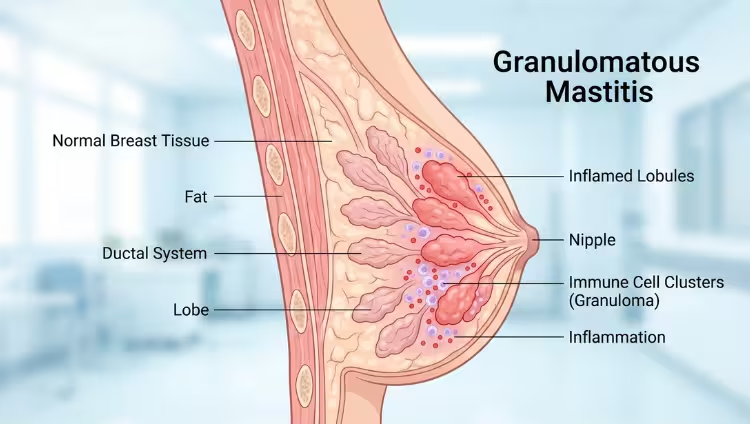
Granulomatous Mastitis (also known as Idiopathic Granulomatous Mastitis or IGM) is a rare inflammatory disease of the breast. It causes firm, painful lumps to form. Unlike a typical infection (mastitis) that goes away quickly with a short course of antibiotics, GM is “chronic,” meaning it can last for months or even recur after treatment.
Because it creates a hard mass and can cause skin changes, even doctors sometimes mistake it for breast cancer initially. This is why seeing the best granulomatous mastitis specialist in Lucknow is crucial for proper testing.
Why is it Mistaken for Breast Cancer?
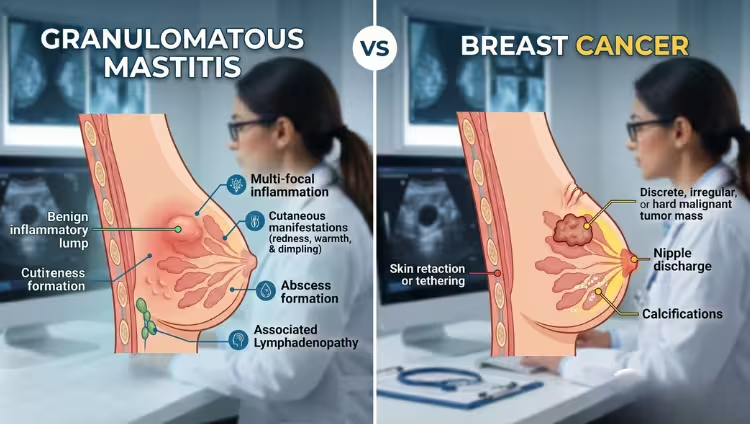
It is very common for patients to feel terrified when they first notice the symptoms of GM. Here is why the confusion happens:
-
The Lump: GM creates a hard, fixed lump that feels similar to a cancerous tumor.
-
Skin Changes: It can cause the skin on the breast to look red, inflamed, or even “pitted” (like the skin of an orange), which is also a sign of certain types of breast cancer.
-
Nipple Issues: It can cause nipple retraction (the nipple pulling inward) or discharge.
-
Lymph Nodes: In some cases, it can cause the lymph nodes under the arm to swell.
Because these symptoms overlap, a breast cancer surgeon in Lucknow will usually perform a biopsy to rule out cancer before starting GM treatment.
Common Symptoms of Granulomatous Mastitis
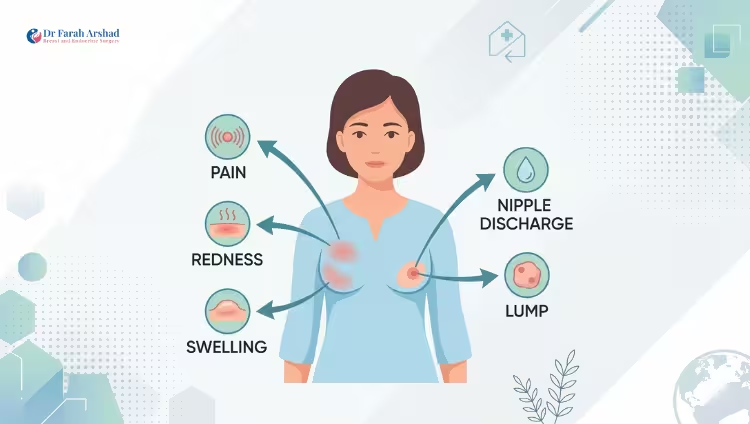
If you are experiencing any of the following, you should book an appointment with a breast specialist :
-
A firm lump: Often found in only one breast.
-
Breast pain: Unlike many early-stage cancers, GM is often quite painful.
-
Redness and Warmth: The breast may feel hot to the touch.
-
Abscesses: You might develop “pockets” of pus that may drain through the skin.
-
Skin Ulcers: In severe cases, the skin might break open.
-
Fever: Some women feel generally unwell or have a low-grade fever.
What Causes Granulomatous Mastitis?
Doctors are still studying the exact cause of GM, but most believe it is an autoimmune reaction. This means the body’s immune system accidentally attacks the healthy breast tissue, causing intense inflammation.
Other factors that might contribute include:
-
Hormonal Changes: It often affects women who have recently been pregnant or are breastfeeding.
-
Oral Contraceptives: Some studies suggest a link to birth control pills.
-
Hyperprolactinemia: High levels of the hormone prolactin.
-
Unknown Infections: In some cases, a specific type of bacteria (Corynebacterium) is involved.
Step-by-Step: How is Granulomatous Mastitis Diagnosed?
If you suspect you have this condition, here is the process a Granulomatous Mastitis specialist will follow to give you an answer:
Step 1: Clinical Breast Exam
The doctor will physically feel the lump, check for skin changes, and examine the lymph nodes in your armpit.
Step 2: Imaging (Ultrasound or Mammogram)
The doctor will order an ultrasound or a mammogram. While these scans show the lump, they often cannot distinguish between GM and cancer because they look very similar on a screen.
Step 3: Core Needle Biopsy (The Most Important Step)
This is the “gold standard” for diagnosis. A small needle is used to take a tissue sample from the lump. A pathologist examines cells under a microscope. If they see “granulomas” (clumps of immune cells) and no cancer cells, the diagnosis of GM is confirmed.
Step 4: Ruling Out Other Infections
The doctor may take a sample of any discharge or pus to check for tuberculosis (TB) or common bacterial infections, as these can sometimes mimic GM.
Treatment Options for Granulomatous Mastitis
Treating GM requires patience. It is not a “one-pill-and-done” situation. Your granulomatous mastitis specialist in Lucknow will create a plan based on your severity.
1. Observation (“Wait and See”)
In very mild cases, the inflammation might go away on its own. The doctor will monitor you closely to see if the lump shrinks.
2. Steroid Therapy
Since GM is an inflammatory condition, corticosteroids (like Prednisone) are often used to reduce swelling and shrink the mass. This is the most common treatment.
3. Antibiotics
If there is a secondary infection or an abscess, the doctor will prescribe antibiotics.
4. Drainage of Abscesses
If painful pockets of pus form, the specialist may use a needle to drain them (fine-needle aspiration) to provide relief.
5. Immunosuppressants
If steroids don’t work or the condition keeps coming back, doctors might use other medications that calm the immune system (like Methotrexate).
6. Surgery
Surgery is usually a last resort. Removing the lump (wide local excision) can sometimes cause wound-healing problems, so it is performed only if other treatments fail.
Living with Granulomatous Mastitis: Tips for Recovery
Dealing with chronic breast inflammation is physically and emotionally draining. Here is how you can manage:
-
Wear a Supportive Bra: A soft, wireless sports bra can reduce pain caused by breast movement.
-
Warm/Cold Compresses: Use whatever feels better to manage the throbbing pain and swelling.
-
Anti-inflammatory Diet: Eat plenty of fruits, vegetables, and omega-3 fatty acids to help your body fight inflammation.
-
Stress Management: Stress can flare up autoimmune-like conditions. Practice yoga or meditation.
-
Follow up regularly: Even when you feel better, keep your appointments with your breast specialist in Lucknow to ensure it doesn’t return.
Why You Need a Specialist in Lucknow
Granulomatous Mastitis is rare, and many general practitioners may not have seen many cases. This leads to misdiagnosis or unnecessary surgeries. Finding a dedicated Granulomatous Mastitis specialist is important because:
-
They know the difference: They can distinguish GM from Breast Cancer quickly, saving you from unnecessary panic.
-
Advanced Imaging: Specialized centers in Lucknow have better ultrasound technology to track the progress of the inflammation.
-
Correct Medication Dosage: Steroid treatment for GM must be carefully tapered. A specialist knows exactly how to adjust the dose to prevent side effects.
If you are worried about a lump, visiting a breast cancer specialist in Lucknow ensures that you get the right tests (like a biopsy) to rule out the worst-case scenario.
Myths vs. Facts About Granulomatous Mastitis
Myth: Granulomatous Mastitis leads to breast cancer.
Fact: There is no evidence that GM causes cancer. However, having GM can make it harder to detect new lumps, so regular checkups are a must.
Myth: It is contagious.
Fact: GM is not an infection you can “catch” or give to someone else. It is an internal inflammatory process.
Myth: You must stop breastfeeding immediately.
Fact: While it can make breastfeeding painful, you should consult your specialist. In many cases, you can continue, though the affected breast may produce less milk.
Myth: Surgery is the only cure.
Fact: Most cases are managed successfully with medication (steroids) rather than surgery.
Frequently Asked Questions
1. How long does it take for Granulomatous Mastitis to heal?
It varies. Some women recover in a few months, while for others, it may take 6 to 12 months. It is known for being a “stubborn” condition that requires long-term follow-up with a breast specialist in Lucknow.
2. Can I get Granulomatous Mastitis in both breasts?
While it usually affects only one breast, in about 5-10% of cases, it can occur in both breasts either at the same time or one after the other.
3. Does a biopsy make Granulomatous Mastitis worse?
No. A biopsy is the only way to be 100% sure the lump isn’t cancer. While it might cause temporary bruising, it is a necessary step for a correct diagnosis.
4. Will the lump leave a permanent scar?
If the condition causes skin ulcers or requires surgery, there might be some scarring. However, early treatment by the best granulomatous mastitis specialist in Lucknow can minimize tissue damage.
5. Why is my doctor suggesting a “wait and watch” approach?
If the symptoms are not painful and not progressing, some doctors prefer to wait because steroid treatments have side effects (like weight gain or mood changes). If the body can heal itself naturally, that is often the best path.
6. Is Granulomatous Mastitis the same as a breast abscess?
No. A simple abscess is a collection of pus usually caused by a common infection. GM is a deeper, chronic inflammatory condition. An abscess might be part of GM, but GM is more complex.
Conclusion
Granulomatous Mastitis is a challenging condition, but it is manageable. The most important thing to remember is that while it mimics the appearance of cancer, it is a benign (non-cancerous) inflammatory issue.
Don’t let fear keep you away from the clinic. If you notice any changes in your breast, the first step is to seek expert advice. Whether you need a breast cancer specialist in Lucknow to rule out malignancy or a Granulomatous Mastitis specialist to manage your inflammation, early intervention is the key to a faster recovery.
Take Action Today
Are you experiencing breast pain, redness, or a suspicious lump? Don’t wait for the symptoms to get worse. Consult the best granulomatous mastitis specialist in Lucknow, Dr Farah Arshad, today for a comprehensive evaluation and a personalized treatment plan.
[Contact Us with our Breast Specialist in Lucknow]
