




Some breast cancers are linked to inherited genetic mutations such as BRCA1 and BRCA2, but not all breast cancer is hereditary. While family history increases risk, lifestyle, age, and environmental factors play a larger role for most people. Understanding your genetic risk through professional guidance helps with early screening and personalized prevention strategies.
Introduction
When someone receives a breast cancer diagnosis, the first question they often ask is, “Why did this happen?” Close behind that is the worry, “Will my children or siblings get this too?”
The fear of “cancer genes” is common, but the reality is often more reassuring than we think. While genetics play a part, they are only one piece of a much larger puzzle.
In this guide, we will break down the science of breast cancer genetics into simple terms. As a breast cancer specialist in Lucknow, Dr. Farah Arshad emphasizes that knowledge is the best tool for early detection and peace of mind.
What Does “Genetic Breast Cancer” Mean?
To understand if breast cancer is genetic, we first need to understand what a “gene” is. Think of genes as an instruction manual for your body. They tell your cells how to grow and when to stop growing.
Sometimes, there is a “spelling mistake” in this manual. This is called a mutation. When these instructions are wrong, cells can grow out of control, leading to cancer.
Is breast cancer hereditary or genetic?
All cancer is “genetic” because it involves changes in genes. However, not all cancer is “hereditary.”
- Hereditary (Inherited): This is cancer caused by a gene mutation passed down from a parent to a child. You are born with this “mistake” in your DNA.
- Sporadic (Non-inherited): This is cancer caused by mutations that happen over time due to aging, lifestyle, or environment. You are not born with these.
Actually, only about 5% to 10% of breast cancers are truly hereditary. The remaining 90% happen by chance or due to life factors.
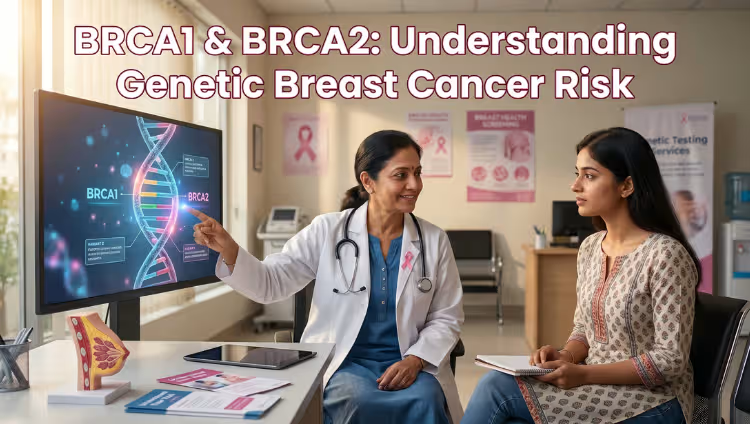
The Role of BRCA1 and BRCA2
You may have heard of the “Angelina Jolie gene.” These are the BRCA1 and BRCA2 genes.
Normally, these genes are the “protectors.” Their job is to repair damaged DNA and keep your breast cells growing normally.
When these genes have a mutation, they can’t do their job. This increases the risk of:
- Breast cancer (in both women and men)
- Ovarian cancer
- Prostate cancer
- Pancreatic cancer
If you have a BRCA mutation, it doesn’t mean you will get cancer. It just means your risk is higher than someone without the mutation. Dr. Farah Arshad often guides patients through genetic counseling to determine if testing is necessary.
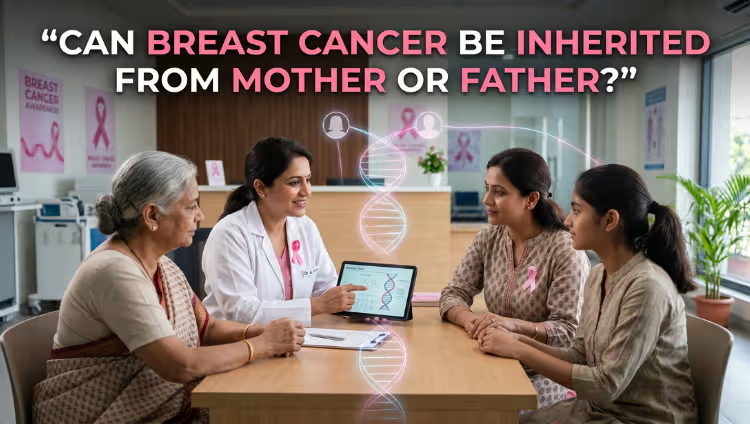
Is Breast Cancer Inherited From Mother or Father?
A very common myth is that breast cancer risk only comes from the mother’s side of the family. This is incorrect.
Is breast cancer inherited from mother or father? The answer is both.
You get half of your genes from your mother and half from your father. If your father’s side of the family has a history of breast or ovarian cancer, you can inherit those mutated genes just as easily as you could from your mother.
When a specialist like Dr. Farah Arshad looks at your family tree, they look at both sides to get the full picture of your health risk.
Family History and Breast Cancer Risk
Having a relative with breast cancer doesn’t automatically mean you are at high risk, but it does change the screening recommendations.
Here is a simple chart to help you understand risk impact:
| Family History Situation | Risk Impact | Action Level |
| No relatives with breast cancer | Average risk | Standard screening (age 40+) |
| One 2nd-degree relative (aunt, grandmother) | Slightly increased risk | Regular self-exams & clinical checks |
| One 1st-degree relative (mother, sister, daughter) | Increased risk (2x) | Discuss early screening with a specialist |
| Multiple relatives or a young age diagnosis | Higher genetic suspicion | Genetic counseling & BRCA testing |
Family History Breast Cancer Risk Calculator
While online calculators exist, they are no substitute for a clinical evaluation. A breast cancer specialist in Lucknow will look at the age at which your relatives were diagnosed and the specific types of cancer in the family to give you an accurate risk score.
Other Genetic Syndromes Linked to Breast Cancer
While BRCA1 and BRCA2 are the most famous, other genes can also increase risk. These include:
- PALB2: Often called the “partner of BRCA2.”
- CHEK2: A gene that usually helps with DNA repair.
- TP53: A very rare mutation that can lead to several types of cancer (Li-Fraumeni syndrome).
- PTEN: Linked to Cowden syndrome, which can cause both non-cancerous growths and breast cancer.
These mutations are less common than BRCA but are still important for specialists to consider when evaluating a family’s medical history.
The Interplay of Genetics, Environment, and Lifestyle
If only 10% of breast cancer is hereditary, what causes the rest?
Is breast cancer genetic or environmental? For most people, it is a combination of both. Think of genetics as “loading the gun” and environment/lifestyle as “pulling the trigger.”
What is 90% of cancer caused by?
Most cancers are caused by “sporadic” mutations that build up as we age. Factors that contribute to this include:
- Age: The older we get, the more “copying errors” our cells make.
- Hormones: Long-term exposure to estrogen (starting periods early or late menopause).
- Lifestyle: Obesity, lack of physical activity, and heavy alcohol consumption.
- Environment: Exposure to certain chemicals or high-dose radiation.
Even if you have a genetic risk, maintaining a healthy lifestyle can help lower the chance of that “instruction manual” getting further damaged.
Knowing Your Family History Can Save Lives
Knowing your family history is not about living in fear—it’s about having a plan.
When you share your family history with Dr. Farah Arshad, it allows for:
- Earlier Screening: You might start mammograms at age 30 instead of 40.
- Specialized Testing: Using MRI alongside mammograms for better clarity.
- Preventive Options: In some high-risk cases, medication or preventive surgery can be discussed.
Early diagnosis is the most powerful tool we have. When breast cancer is caught early, the survival rate is extremely high.
What are the Top 3 Signs of Breast Cancer?
Regardless of your genetic risk, everyone should be aware of the “red flags.” If you notice these, consult a breast cancer specialist in Lucknow immediately.
- A New Lump: Usually painless, hard, and has uneven edges (though some can be soft).
- Skin Changes: Dimpling of the skin (looking like an orange peel) or redness/scaling of the nipple.
- Nipple Discharge: Any fluid other than breast milk that comes out without squeezing, especially if it is bloody.
Other signs include a change in the size or shape of the breast or persistent pain in one specific spot.
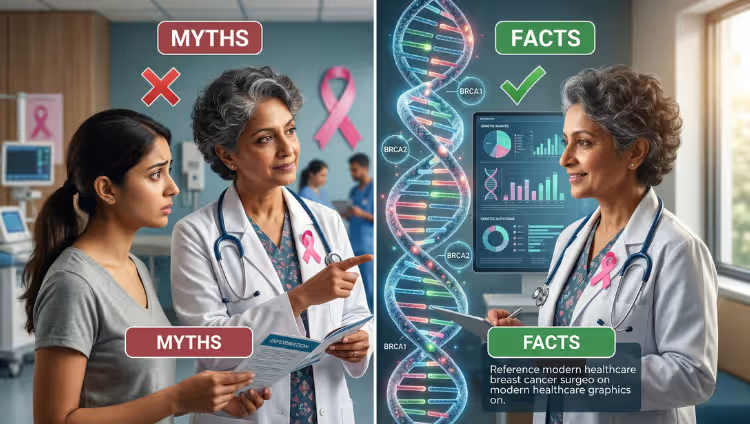
Myths vs. Facts About Hereditary Breast Cancer
Myth: “No one in my family has breast cancer, so I’m safe.”
Fact: Most people diagnosed with breast cancer (about 85%) have no family history of the disease.
Myth: “If I have the BRCA gene, I will definitely get cancer.”
Fact: Having the gene means your risk is higher, but it is not a guarantee. Many women with the gene never develop cancer.
Myth: “Only women can carry and pass on breast cancer genes.”
Fact: Men carry these genes and can pass them to their daughters and sons. Men can also get breast cancer themselves.
Myth: “Genetic testing is scary and always leads to surgery.”
Fact: Genetic testing is just a blood or saliva test. The results simply help you and your doctor make better decisions about your health.
How to Reduce Breast Cancer Risk
Even if you have a family history, you can take steps to protect yourself.
- Maintain a Healthy Weight: Fat cells produce estrogen, which can fuel certain types of breast cancer.
- Be Physically Active: Aim for at least 30 minutes of moderate exercise most days.
- Limit Alcohol: Even small amounts can increase risk.
- Breastfeed if Possible: Breastfeeding for a year or more can slightly lower risk.
- Avoid Smoking: Smoking is linked to a higher risk of breast cancer in younger, premenopausal women.
- Regular Screenings: This is the most important step. Don’t skip your annual check-ups.
A Real-Life Example: The Power of Awareness
Consider the story of a patient named Priya (name changed). Priya’s mother had breast cancer at age 45. Priya was worried but waited until she was 40 to see a doctor.
When she finally consulted Dr. Farah Arshad, a detailed family history revealed that her maternal aunt also had ovarian cancer. This triggered a recommendation for genetic testing.
Priya tested positive for a BRCA1 mutation. Because of this discovery, Dr. Arshad started her on a high-vigilance screening program. During her very first specialized MRI, a tiny, 5mm tumor was found. Because it was caught so early, Priya needed only a minor surgery and avoided aggressive chemotherapy.
This is why we talk about genetics—not to scare, but to prepare.
FAQs: Common Questions About Genetics & Breast Cancer
Q.Is breast cancer inherited from the mother or father?
It can be inherited from either. You receive 50% of your DNA from each parent, so a father’s family history is just as important as a mother’s.
Q.Is breast cancer hereditary from grandmother?
Yes. If your grandmother had a gene mutation (like BRCA), she could have passed it to your parent, who then passed it to you.
Q.Is breast cancer genetic or environmental?
It is usually a mix. While 5-10% is purely genetic (inherited), the majority is sporadic, influenced by age, environment, and lifestyle.
Q.What is the hereditary percentage of breast cancer?
Approximately 5% to 10% of all breast cancer cases are caused by inherited gene mutations.
Q.What are the top 3 signs of breast cancer?
The most common signs are a new lump in the breast/underarm, skin dimpling or irritation, and unusual nipple discharge.
Q.Can lifestyle reduce hereditary breast cancer risk?
Yes. While you cannot change your genes, a healthy diet, regular exercise, and avoiding tobacco can help manage your overall risk and improve your body’s resilience.
Q.Is hormonal breast cancer hereditary?
Some hormonal (ER-positive) cancers can be hereditary, but many are sporadic. Genetic testing can help clarify the specific nature of the cancer.
Conclusion: Empowerment Through Awareness
Understanding your risk is the first step toward a long, healthy life. Breast cancer is a complex disease, but when we break down the genetics, it becomes less mysterious and more manageable.
Whether you have a strong family history or are simply looking to stay proactive about your health, remember that you don’t have to navigate this alone. Modern medicine offers incredible tools for screening, prevention, and early treatment.
As an experienced breast cancer specialist in Lucknow, Dr. Farah Arshad is dedicated to providing compassionate, evidence-based care. By focusing on your unique family history and lifestyle, we can create a personalized plan that gives you peace of mind.
Take Charge of Your Health Today.
👉 Understanding your family history and genetic risk can help detect breast cancer earlier and improve treatment outcomes. Regular screening and timely consultation with an experienced breast cancer specialist are important for better awareness and peace of mind.
Consult Dr. Farah Arshad for expert breast cancer screening, guidance, and personalized care. Early detection is your best protection.
