



A red spot on the breast should be a concern if it spreads quickly, covers more than one-third of the breast, or makes the skin feel thick and pitted like an orange peel. If the redness is accompanied by warmth, swelling, or heaviness and does not improve with antibiotics, you should consult a Breast Cancer specialist in Lucknow immediately.
Finding a red spot on your breast can be a frightening experience. Your mind might immediately jump to the worst-case scenario. However, it is important to take a deep breath and stay calm. Most red spots are caused by simple things like skin irritation, a bug bite, or a minor infection.
But sometimes, redness is a signal from your body that something more serious is happening. One of the rarer but more aggressive forms of breast cancer is called Inflammatory Breast Cancer (IBC). Unlike other types of cancer that usually start with a hard lump, IBC often shows up as redness, swelling, or skin changes.
Red Spot on Breast: Bug Bite, Pimple, or Cancer?
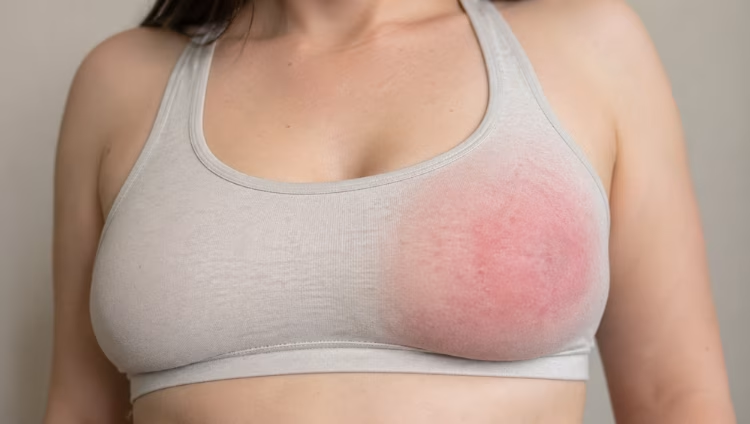
Our skin reacts to many things. Before we worry about cancer, let’s look at the most common reasons for a red spot on the breast.
1. Bug Bites or Stings
If the spot is small, very itchy, and has a tiny hole or “punctum” in the middle, it is likely a bug bite. These usually fade within a few days.
2. Heat Rash or Friction
If you have been exercising or wearing a bra that is too tight, you might develop a rash. This is often caused by sweat getting trapped against the skin. It usually looks like small red bumps and goes away once the skin is kept cool and dry.
3. Skin Pimples or Boils
The breast has pores and hair follicles just like the rest of your body. You can get a standard pimple or a small infected boil. These are usually painful to the touch and might have a white head.
4. Mastitis (Infection)
This is very common in women who are breastfeeding, but it can happen to anyone. It is an infection of the breast tissue. It causes redness, pain, and often a fever.
How to tell if it’s concerning?
If the red spot is just a small dot that stays the same size or gets better in 48 hours, it is likely harmless. However, if the redness starts to spread like a stain, covers a large area of the breast, or makes the skin look “angry” and swollen, it is time to pay closer attention.
Inflammatory Breast Cancer – Symptoms and Causes
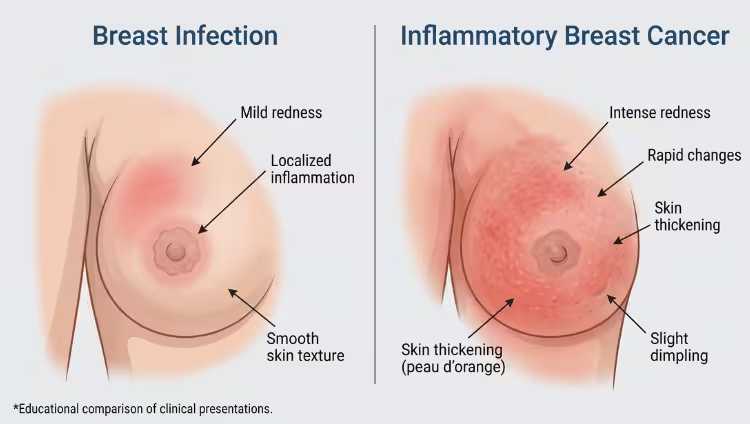
Inflammatory Breast Cancer (IBC) is a unique and aggressive form of cancer. It is called “inflammatory” because the breast often looks inflamed—red, swollen, and warm.
What causes IBC?
In most breast cancers, the cancer cells form a solid lump. In IBC, the cancer cells block the lymphatic vessels in the skin of the breast. Imagine your breast has a drainage system (lymph vessels) to move fluids. If these “pipes” get blocked by cancer cells, the fluid backs up. This causes the breast to swell and turn red.
Key Symptoms of IBC:
-
Rapid Change: Symptoms often appear very quickly—sometimes over just a few weeks.
-
Redness: A pink, reddish, or even purple hue that covers at least one-third of the breast.
-
Swelling: One breast may suddenly look much larger or feel much heavier than the other.
-
Skin Thickening: The skin may start to look like the skin of an orange (Peau d’orange). It looks pitted or has tiny dimples.
-
Warmth: The breast may feel noticeably warmer than the rest of your body.
-
Nipple Changes: The nipple might pull inward (flatten) or discharge fluid.
Is Your Rash a Breast Infection or Inflammatory Cancer?
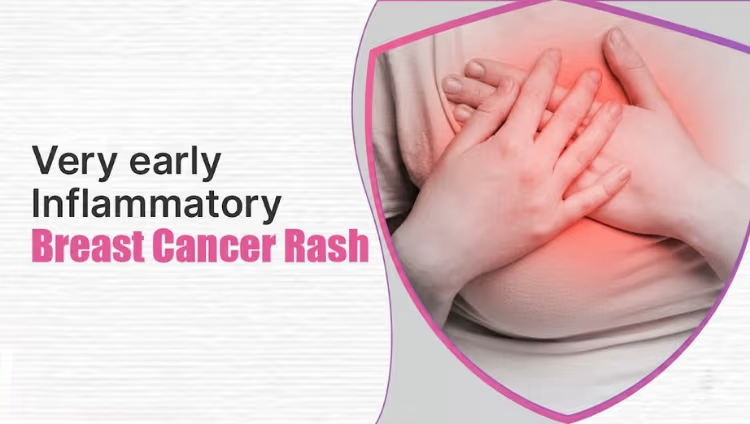
One of the biggest challenges with IBC is that it looks almost exactly like a breast infection (Mastitis). Even doctors can sometimes mistake one for the other.
As a Female Breast Cancer specialist in Lucknow, I often see patients who were initially treated for an infection. Here is how we differentiate the two:
| Feature | Breast Infection (Mastitis) | Inflammatory Breast Cancer (IBC) |
| Fever | Usually present (high fever/chills). | Usually absent. |
| Pain | Often very sharp or localized. | May feel like heavy pressure or a dull ache. |
| Response to Antibiotics | Improves within 7 to 10 days. | No improvement after antibiotics. |
| Skin Texture | Swollen but usually smooth. | Pitted, thick, like an orange peel. |
| Onset | Can be sudden. | Very rapid (days or weeks). |
The Golden Rule: If your doctor prescribes antibiotics for a breast rash and it does not get better within a week, you must go back for further testing. You should ask for an imaging test, such as an ultrasound or a biopsy.
Early Warning Signs Most Women Ignore
Because IBC doesn’t always cause a “lump” that you can feel during a self-exam, many women ignore the early signs. They assume they just have a skin allergy or that their bra is irritating them.
“My first symptoms of inflammatory breast cancer”
Many survivors share similar stories. They might say, “I noticed my breast looked a bit pink, like a mild sunburn,” or “I felt a sudden heaviness in my chest that wouldn’t go away.”
Watch out for these subtle signs:
-
Persistent Redness: If a red patch stays for more than two weeks, even if it doesn’t hurt.
-
Increased Heaviness: Feeling like one breast is significantly heavier or “dropping” more than the other.
-
Large Pores: If the pores on your breast skin suddenly look very large and prominent.
-
Flattened Nipple: A nipple that used to point out but now looks flat or tucked in.
Real-Life Scenario:
A patient named Sunita noticed a small red patch on her left breast. She thought it was an insect bite from gardening. She applied soothing creams, but the patch grew larger over two weeks. It didn’t itch, but the skin started feeling “tough.” Instead of waiting longer, she sought a consultation. Because she acted quickly, we were able to begin treatment before the cancer spread further. Early action saved her life.
Does Inflammatory Breast Cancer Itch or Cause Pain?
This is a common question in my clinic. The answer is: Yes, it can.
Itching
Because the lymph vessels are blocked and the skin is stretched, IBC can cause significant itching. Many women mistake this for an allergy or eczema. If you are itching and you see redness that doesn’t go away with anti-itch cream, it needs a professional look.
Pain
The pain in IBC is usually not a “sharp” stabbing pain. Instead, patients describe it as:
-
Tenderness or soreness.
-
A feeling of intense heat or burning.
-
A heavy, “full” feeling that makes the breast uncomfortable.
While pain is common with many non-cancerous conditions (like hormonal changes), the combination of pain with visible skin changes is what makes it a red flag.
How Long Can Breast Cancer Go Undetected?
Standard breast cancer can sometimes grow slowly over the years. However, Inflammatory Breast Cancer is different. It is a “fast-moving” cancer.
Because it spreads through the skin’s lymph vessels rather than forming a single lump, it can progress from Stage 1 to Stage 3 or 4 in a matter of months. This is why “detecting” it early is so vital.
You cannot wait for your yearly mammogram if you see a red spot today. If you notice changes, you should see a Breast Cancer surgeon in Lucknow within days, not months. Early detection in IBC doesn’t happen through a routine screening; it happens because a woman notices a change in her own body and speaks up.
How Treatable Is Inflammatory Breast Cancer?
If the diagnosis is IBC, the first thing you need to know is: There is hope.
In the past, IBC was very difficult to treat. Today, thanks to modern medicine and specialized care, the outlook has improved significantly. Treatment for IBC usually follows a “multimodal” approach, meaning we use several different types of therapy together.
1. Chemotherapy
Usually, the first step is chemotherapy to shrink the cancer and clear the lymph vessels. This makes surgery more successful later.
2. Surgery
After chemotherapy, a mastectomy (removal of the breast tissue) is often performed to remove any remaining cancer cells.
3. Radiation Therapy
This is used after surgery to kill any microscopic cancer cells that might be left behind, reducing the chance of the cancer coming back.
“Has anyone beaten inflammatory breast cancer?”
Absolutely. Many women have survived IBC and are living healthy, full lives today. The key factors for “beating” it are:
-
Getting a fast and accurate diagnosis.
-
Starting treatment immediately.
-
Having a dedicated team of specialists to manage the care.
While IBC is aggressive, medical science has become even more aggressive in fighting it.
When Should You See a Doctor?
I always tell my patients: “It is better to have a false alarm than a late diagnosis.” You are not “bothering” your doctor by asking about a red spot.
👉 Seek medical help if:
-
The redness lasts more than 5–7 days.
-
The red area is getting larger or darker.
-
The breast feels unusually warm or hot to the touch.
-
The skin looks dimpled, like an orange peel.
-
The breast has grown in size or feels much heavier.
-
You have a “rash” that did not get better with antibiotic cream or pills.
-
Your nipple has changed shape or started leaking fluid.
If you are in Uttar Pradesh and are worried about any of these signs, please consult a breast cancer specialist in Lucknow. A quick physical exam and an ultrasound can often provide the answers and peace of mind you need.
FAQs (Frequently Asked Questions)
1. What are the first symptoms of inflammatory breast cancer?
The first symptoms are usually a pink or red area on the breast, a feeling of heaviness, and mild swelling. Unlike other cancers, you might not feel a hard lump.
2. Does inflammatory breast cancer itch?
Yes, it can. The blockage of lymph vessels and the swelling of the skin often cause persistent itching that doesn’t go away with standard skin creams.
3. How long can breast cancer go unnoticed?
While some cancers grow slowly, Inflammatory Breast Cancer (IBC) moves very fast. It can become advanced in just a few weeks or months. This is why seeing a specialist quickly is vital.
4. Is inflammatory breast cancer treatable?
Yes. With a combination of chemotherapy, surgery, and radiation, IBC is treatable. New targeted therapies have also improved survival rates significantly.
5. Can people survive inflammatory breast cancer?
Yes, many women survive IBC. Survival depends on how quickly it is diagnosed and how well the body responds to the initial chemotherapy.
6. What does a cancerous breast rash look like?
A cancerous rash (IBC) usually looks like a solid area of redness or bruising. It often covers a large part of the breast and is accompanied by skin thickening or “pitting” (dimples).
Conclusion: Take Action for Your Peace of Mind
A red spot on your breast is most likely something minor, but your health is too important to leave to chance. Inflammatory Breast Cancer is rare, but it requires fast action. By knowing the signs—the “orange peel” skin, the rapid swelling, and the persistent redness—you are taking the first step toward protecting yourself.
If you notice any changes in your breast that don’t seem right, don’t wait for it to “go away on its own.” Early diagnosis is the most powerful tool we have in the fight against cancer.
Not every red spot is serious—but some signs should never be ignored.
For an expert evaluation, compassionate care, and an accurate diagnosis, consult a Breast Cancer Surgeon in Lucknow. Your health and peace of mind are our top priorities.
[Contact Dr. Farah Arshad’s Clinic Today for a Consultation]
