



Breast cancer treatment during pregnancy can often be safely managed to protect both the mother and the developing baby. Depending on the stage of pregnancy and the type of cancer, specialists may recommend surgery or carefully timed chemotherapy. Early diagnosis and a personalized plan from an experienced breast cancer specialist are vital for ensuring the health of the mother while minimizing risks to the baby.
A pregnancy diagnosis is usually a time of immense joy, planning, and hope. However, receiving a breast cancer diagnosis during this same period can feel like an emotional earthquake.
As a breast cancer specialist in Lucknow, I often meet women who are paralyzed by two conflicting fears: the fear for their own life and the fear for their unborn child’s safety.
I want to start by telling you something very important: You do not have to choose between your life and your baby’s life.
Modern medicine has advanced significantly. Today, we have clear, evidence-based protocols that allow us to treat cancer effectively while allowing your baby to grow safely.
This guide, written from my perspective as Dr. Farah Arshad, aims to answer your deepest concerns with honesty, medical accuracy, and compassion.
Can Breast Cancer Happen During Pregnancy?
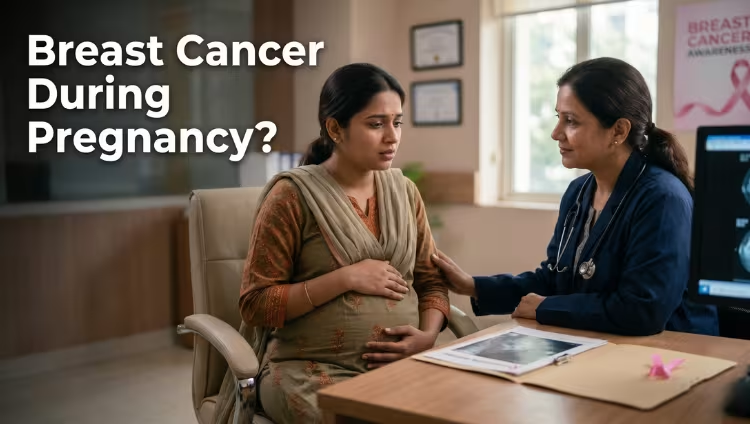
While it is relatively rare, breast cancer is one of the most common cancers diagnosed during pregnancy. It is often referred to as Pregnancy-Associated Breast Cancer (PABC).
PABC is defined as breast cancer that is diagnosed during pregnancy or within the first year after giving birth. It affects about 1 in every 3,000 pregnant women.
The Role of Hormones
Pregnancy involves a massive shift in hormones, particularly estrogen and progesterone. While these hormones help your baby grow, they also cause your breast tissue to change.
These changes are normal, but they can sometimes make it harder to feel a small lump. Because of this, diagnosis is occasionally delayed, as both patients and doctors might assume a lump is just a clogged milk duct or a normal pregnancy change.
The Most Common Type
The most common type of breast cancer in pregnancy is usually the same as in non-pregnant women: Invasive Ductal Carcinoma.
However, because of the hormonal environment and the age of the patients, these cancers can sometimes be slightly more aggressive. This is why “watchful waiting” is never the right approach if you find a lump.
Symptoms of Breast Cancer During Pregnancy
Recognizing the symptoms of breast cancer during pregnancy can be tricky because your breasts are already undergoing significant changes.
During pregnancy, it is normal for breasts to become:
-
Larger
-
Heavier
-
Tender
-
Slightly lumpy (as milk glands develop)
However, you should contact a breast cancer specialist if you notice any of the following:
-
A Firm Lump: A lump that feels different from the rest of the breast tissue and does not go away.
-
Skin Changes: Dimpling, puckering, or redness of the breast skin (similar to an orange peel).
-
Nipple Changes: A nipple that starts pointing inward (retraction).
-
Discharge: Bloody or clear fluid leaking from the nipple (not colostrum or milk).
-
Persistent Swelling: One breast becomes significantly larger or harder than the other in a way that feels unnatural.
If you are in the Uttar Pradesh region, consulting an experienced breast cancer specialist in Lucknow, like Dr. Farah Arshad, can help provide clarity through safe diagnostic tools like ultrasound.
Why Breast Cancer Can Be Hard to Detect During Pregnancy
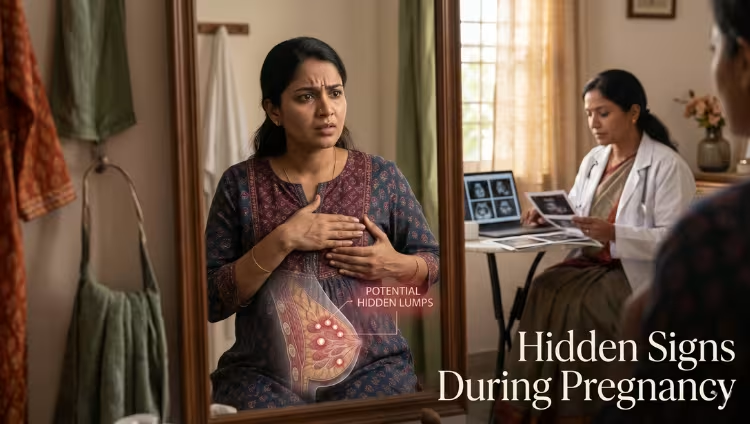
The primary challenge we face in breast cancer care for pregnant women is the density of the breast tissue.
Under the influence of pregnancy hormones, the breasts become very dense and filled with milk-producing glands. On a traditional mammogram, dense tissue appears white—and so does cancer. This makes it like looking for a “polar bear in a snowstorm.”
Furthermore, many women (and some healthcare providers) are hesitant to perform imaging because they fear radiation.
Safe Screening is Possible
I want to reassure you: Diagnostic tools are safe.
-
Ultrasound: This uses sound waves, not radiation, and is completely safe for the baby.
-
Biopsy: A core needle biopsy is the gold standard for diagnosis and is safe to perform during pregnancy under local anesthesia.
-
Mammogram: If necessary, a mammogram can be performed with a lead shield over the abdomen to protect the baby from any scattered radiation.
Is Breast Cancer Treatment Safe During Pregnancy?
The short answer is yes, but the “how” and “when” depend entirely on your trimester.
When I treat patients as a breast cancer specialist in Lucknow, my priority is a multidisciplinary approach. This means I work closely with your obstetrician and a neonatologist (a baby specialist) to ensure every step we take is safe for both of you.
Individualized Planning
No two pregnancies are the same, and no two cancers are the same. We consider:
-
The size and stage of the tumor.
-
The hormone receptor status of the cancer.
-
How far along are you in your pregnancy?
-
Your overall health.
The goal of oncology during pregnancy is to treat the mother’s cancer as effectively as possible while allowing the baby to reach a safe delivery age.
Breast Cancer Treatment by Pregnancy Trimester
The timing of treatment is the most critical factor in ensuring the baby’s safety. Here is a general guideline used by specialists:
| Pregnancy Stage | Possible Treatment Options | Safety Considerations |
| First Trimester (0–13 weeks) | Surgery is generally safe. | Chemotherapy is avoided due to the baby’s organ development. |
| Second Trimester (14–27 weeks) | Surgery and certain Chemotherapy. | Most chemo drugs are safe after the 14th week. |
| Third Trimester (28 weeks +) | Surgery and Chemotherapy. | Chemotherapy is stopped 3–4 weeks before expected delivery. |
| Post-Delivery | Radiation, Hormonal Therapy. | These are almost always delayed until after the birth. |
Note: This table is a general guide. Every medical decision must be made in consultation with your specialist, such as Dr. Farah Arshad.
Can Surgery and Chemotherapy Be Done During Pregnancy?
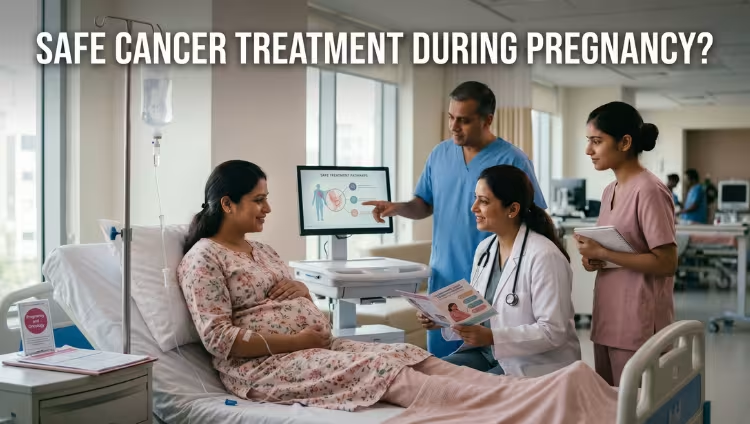
This is the question that keeps most mothers awake at night. Let’s break down the two most common treatments.
1. Surgery during pregnancy
Surgery to remove the tumor (lumpectomy) or the whole breast (mastectomy) is considered safe during all trimesters of pregnancy.
Modern anesthesia is very advanced. Anesthesiologists use specific medications and monitoring techniques to ensure the baby receives enough oxygen and blood flow throughout the procedure. Research shows that surgery does not increase the risk of birth defects or miscarriage when performed by an expert team.
2. Chemotherapy considerations
The thought of “poison” (as some patients call it) entering their body while a baby is inside is terrifying. However, the placenta acts as a very effective filter.
Many chemotherapy drugs have large molecules that do not easily cross the placenta. In the second and third trimesters, chemotherapy can be administered safely.
Studies following children who were exposed to chemotherapy in the womb have shown that they do not have higher rates of health problems or cognitive issues compared to other children.
Emotional Challenges for Mothers Diagnosed During Pregnancy
A cancer diagnosis is a “thief of joy.” It steals the excitement of choosing baby clothes and replaces it with hospital visits.
It is completely normal to feel:
-
Guilt: Feeling like your body is “failing” your baby.
-
Fear: Wondering if you will be there to see your child grow up.
-
Anger: Feeling that this is unfair.
As a breast cancer specialist, I believe that treating the mind is just as important as treating the body. Dr. Farah Arshad and her team emphasize compassionate care, often connecting patients with support groups or counselors who specialize in treating pregnancy-related cancer.
You are not just a “patient”; you are a mother-to-be, and your emotional well-being directly impacts your physical recovery.
Breast Cancer Survival Rate During Pregnancy
There is a common myth that breast cancer during pregnancy is a “death sentence” because it is more aggressive.
The truth is more hopeful. Research suggests that when you compare pregnant women to non-pregnant women of the same age and cancer stage, the breast cancer survival rate during pregnancy is nearly identical.
The primary reason outcomes were historically worse was due to delays in diagnosis. Because lumps were ignored or dismissed, the cancer had more time to spread.
The key to survival is early action. If the cancer is caught early and treated correctly, the prognosis for the mother is excellent.
Real Patient Concerns and Stories
During my years of practice, I have heard many heart-wrenching questions. Here are a few that might be on your mind:
“Will my baby get cancer?”
No. Cancer does not spread from the mother to the baby. The placenta is a powerful barrier.
“Do I have to end my pregnancy?”
In the vast majority of cases, the answer is no. Termination of pregnancy does not improve the mother’s chances of surviving breast cancer. We can almost always find a way to treat you while you continue your pregnancy.
“Can I breastfeed?”
If you are undergoing chemotherapy or certain hormonal therapies after birth, breastfeeding is usually not recommended because these drugs can pass through breast milk. However, many women go on to have healthy breastfeeding experiences with future children after their treatment is complete.
A Story of Hope
I remember a patient, let’s call her “Sita,” who was diagnosed at 20 weeks pregnant. She was terrified. We started her on chemotherapy in her second trimester. She lost her hair, but she never lost her spirit. She delivered a healthy baby boy at 37 weeks. Today, Sita is cancer-free, and her son is a thriving toddler. This is why we do what we do.
How to Choose the Right Breast Cancer Specialist During Pregnancy
When you are pregnant and facing cancer, you need more than just a doctor; you need a team. If you are looking for a breast cancer specialist in Lucknow, look for these qualities:
-
Multidisciplinary Care: Does the doctor work with oncologists, surgeons, and obstetricians?
-
Experience: Have they handled pregnancy cancer treatment cases before?
-
Infrastructure: Does the hospital have a high-risk pregnancy unit and a Neonatal ICU (NICU)?
-
Empathy: Do they listen to your fears and respect your wishes for your baby?
Dr. Farah Arshad is known for providing this exact level of integrated, family-centered care, ensuring that both mother and child are the priority.
FAQs: Common Questions About Breast Cancer During Pregnancy
1. Is breast cancer treatment safe during pregnancy?
Yes, especially after the first trimester. Surgery is generally safe throughout, and chemotherapy can be safely administered during the second and third trimesters.
2. What are the symptoms of breast cancer during pregnancy?
The most common symptoms include a hard lump, changes in the shape of the breast, nipple discharge, or skin dimpling.
3. Can chemotherapy harm the baby?
During the first trimester, it can cause birth defects. However, during the second and third trimesters, studies show it is safe and does not affect the baby’s long-term development.
4. What is the most common type of breast cancer in pregnancy?
The most common type is Invasive Ductal Carcinoma.
5. Can pregnant women undergo breast surgery?
Yes. Breast surgery is safe for both the mother and the baby at any stage of pregnancy, provided the anesthesia is managed by experts.
6. Does pregnancy increase breast cancer risk?
In the long term, pregnancy and breastfeeding actually decrease the lifetime risk of breast cancer. However, the risk is temporarily slightly higher in the years immediately following childbirth.
7. Is breastfeeding possible after treatment?
It depends on the treatment. While on chemotherapy or radiation, it is not recommended. Once treatment ends, it may be possible, depending on the type of surgery performed.
Final Advice from Dr. Farah Arshad
If you have just been diagnosed, take a deep breath. You are stronger than you feel right now.
The most important step you can take today is to seek expert help. Do not wait until after you deliver to start your care. Breast cancer care is a journey, and with the right team by your side, it is a journey you can navigate successfully.
As a breast cancer specialist in Lucknow, my goal is to see you holding your healthy baby in your arms while we work toward your complete recovery.
Consult Dr. Farah Arshad for Compassionate Care
A breast cancer diagnosis during pregnancy can feel overwhelming, but timely medical guidance and carefully planned treatment can help protect both mother and baby. Early consultation with an experienced breast cancer specialist is important for safer decision-making and better outcomes.
Contact Dr. Farah Arshad today for personalized, expert, and compassionate breast cancer care during pregnancy. You and your baby deserve the best start possible.
